
In his essay Close Encounters with the Other Kind, Ankur Barua wonders aloud what a Muslim would do should he ask himself, “where can I learn something about the key values, ideas, and practices of a Hindu way of life?” I can answer that for him. I took my family from New York City all the way to Berkeley, California so that I could do a PhD at the Graduate Theological Union. I learned Sanskrit from a committed Gauḍīya Vaiṣṇava philosopher, delved into the Śākta tradition with a Bengali Śakta Comparative Theologian, sat one-on-one to review the broad range of Sanskritic philosophy with a specialist in Indian philosophy, crowded around a Swamini – whose teacher was a famed commentator on the Gītā – to experience the pedagogy of Advaita Vedānta week after week, and more. In every setting, they knew I was a Muslim, and had come there to learn respectfully and academically from all the resources available in the Center for Dharma Studies. Whether or not those ideas or experiences impacted my worldview was up to me, as an embodied subjectivity, and there was never any pressure except to adhere to the academic standards of a PhD program. I explicitly chose GTU as the only place I knew where I, a Muslim convert since 1998, could study the Hindu tradition and prioritize the scholarly discourse about its continued relevance emanating from those who live and breathe the Hindu tradition every day. It was neither a madrasa nor a gurukula meant only to train the faithful, but it was also not a place where the supposedly universal gaze of the Secular Humanist deigns to incorporate the lifeworlds of premodern enchanted peoples into her or his superior secularized worldview. It was a place where Hindus were Hindus and Muslims were Muslims, but there was space to study each other’s most sacred texts and practices from an academic perspective if we chose to do so.
What led me to look for the GTU is a long story for another time, but there is one moment I would like to recall. When I had served as the “Associate University Chaplain for the Muslim Community” at Brown University from 2009-2013, after leaving being ABD at Princeton University in Islamic Studies, one of the most interesting experiences I had was helping the Hindu students connect with Swami Atmarupananda, an American-born monk of the Ramakrishna Order based in West Bengal. Although a White American like me, Swami Atmarupananda spoke fluent Bengali, was well-versed in Sanskrit texts, and had served his monastic order in India for years. At one of the events I organized for him, I watched as he and my former undergraduate professor Donna Wulff (d. 2025), a specialist in Gauḍīya Vaiṣṇava devotional literature, carried on a private conversation in Bengali. That was one of those moments that served as an inflection point in my life. I could have just said, “wow, that was unusual,” but instead I took a road less travelled and focused on what that might mean. This ultimately led me to the famous quote of Thomas Babington Macaulay, a mid-19th century British colonial official, who said, “a single shelf of a good European library was worth the whole native literature of India and Arabia.” Macaulay was a European supremacist, and could not imagine the 20th/21st century world where I – the descendant of English colonists who left for the Massachusetts Bay Colony in 1630 – would chose Islam for my worldview, and Swami Atmarupananda would chose to follow Ramakrishna and Vivekananda. For us, studying Arabic (in my case) or Sanskrit (in his case) was not to gain a window into a foreign culture as a historian at Oxford or an anthropologist at Yale. Rather, it was to become a better Muslim or a better Hindu.
We live in an interconnected world that is driven by the radical possibility of choice, even when our political discourses about cultural authenticity try to pretend otherwise. This truth was brought home to me when I was in Delhi in late 2025 giving a talk about the book I produced from my GTU experience: “Hindu Bhakti Through Muslim Eyes.” I had just finished the formal conversation with a brilliant and diverse group of young people, when one of them came right up to me and said, “I was born a Hindu but converted to Islam 3 years ago and now I am doing my PhD in Politics! Do you know Imam Tom?!” The man he was referring to is a popular YouTube personality who did his BA at Vassar College and then did a second BA at the Islamic University of Madinah (IUM). For those who know the landscape of contemporary Islamic higher education, IUM is perhaps a paradigmatic example of what Barua calls “the anxiety of influence” in his essay. They not only fear negative influence from all that is outside the boundaries of the Islamic tradition, but also are constantly on guard from myriad “innovations (bidʿa)” and “polytheisms (shirk)” that they worry have crept into what they put forward as a pristine version of Sunnī orthodoxy. I remember in a book by Madawi al-Rasheed about Saudi Arabia she had a chapter called “Searching for the Unmediated Word of God,” and I thought that perfectly sums up the psychology and epistemology of those the Saudi state allows to preach their official version of Islam. In 2026, the graduates of IUM’s biggest fear is that Muslims around the world will learn more about the Imāmī Shīʿī tradition that animates Iranian and Lebanese solidarity with Sunnī Palestinians in their resistance to Israeli occupation. As such, Imam Tom has recently been in the spotlight for a horribly inaccurate YouTube attempt to explain Shīʿī Islam to his overwhelmingly Sunnī audience. So this young Delhi PhD student had no idea how different David and Tom are in both their life experience and educational background, and all that nuance was washed away in the excitement of a recent convert who must have seen in us two White American Muslims his own dreams of pan-Muslim solidarity! Of course, it was an innocent remark that I tactfully responded to in the moment, but my mention of it here highlights the myriad ways that we are all mixed together now. Politicians in India may want to preserve the Hindu tradition, politicians in the USA may want to promote Protestant Christianity, and politicians in Saudi Arabia may want to preach Sunni Islam, but that vignette in Delhi shows that they actually control very little about the global flow of ideas, beliefs, identities, and practices. Hundreds of millions of living individuals, if not billions, have choices that previous generations could not even imagine. Last year I spoke privately to a young man of South Asian descent who was raised a Muslim in “the West,” and had a fairly good grasp of Islam, but was living in a Kṛṣṇa temple as a celibate student (brahmacārī) by choice. He explained to me that he felt the Allāh of the Qurʾān was distant and vague, whereas Kṛṣṇa was more personal, relatable, and loveable. He is the counterpart on the other side of the theological fence to the young man raised as a Hindu who converted to Islam and enjoys watching Imam Tom on YouTube – both have been exposed to an alternative worldview from that in which they were raised, and have chosen to explore it to the full extent of their ability. Of course, whether the convert to Islam or to Kṛṣṇa Bhakti continues their path of adherence to sharīʿa or sādhana until their last breath is not something you or I can know right now. Rather, it is the fact that they exist in the present and that I have spoken with them which intrigues me most.
It is a dislike for glossing over of the complexity of human lives that lies at the heart of why I did what I did, and continue to do, and it seems Barua feels a similar way. Human life presents to us myriad responses to our existential condition, and there is more to learn about the ways in which we confront it than a single lifetime can encompass. But I take comfort in the fact that the first academic study of the indigenous religious traditions of South Asia was done by Abū al-Rayḥān al-Bīrūnī (d. 1048), who wrote the monumental study in Arabic whose title means: “Verifying Information about India, whether it is Acceptable to the Intellect or Completely Preposterous!” Al-Bīrūnī did not have to wait until Britishers began sending Sanskrit manuscripts back to Cambridge to write a monograph on “Hindu Studies.” His book does not shy away from complexity, as al-Bīrūnī’s subtle yet powerful mind tried to unravel Indian philosophy, philology, psychology, calendrical systems, social customs and more. But it is not enough to proclaim the genius of someone long ago, as if the UK can sit on its scientific laurels just because of the brilliance of Sir Isaac Newton. All knowledge formations are continuously growing and adapting to new knowledge, as linguistic communities represent the world in all its diversity through scholarly production. So my book was meant to provide a new chapter in Muslim representations of the Hindu Other, not to simply recover what someone else did in the past. As a Muslim, I know what it is like to be misrepresented in the present by non-Muslim academics specializing in Islamic Studies, and so I tried to follow the prophetic teaching of “love for your brother what you love for your self (yuḥibb li-akhīhi mā yuḥibb li-nafsihi)” and write my book in a way that every Gauḍīya Vaiṣṇava with a PhD in the Humanities – people like Dr. Kenneth Valpey (Krishna Kshetra Swami) at the Oxford Center for Hindu Studies – would find to be accurate and respectful. Whether or not I succeeded in that intention is up for them to decide, not me.
Scholarly production requires specificity. No one whose PhD is in Chemistry is a top researcher in Biology. My book takes up a specific community of “Hindus” who refer to themselves as “Vaiṣṇavas” and centers a unique set of canonical Sanskrit and Bengali texts that lay out their response to our shared existential condition. I highlight, for example, the importance of Rūpa Gosvāmī (d. 1564) and his Sanskrit treatise Bhaktirasāṃṛtasindhu, in part because I believe Muslims can wrap their head around his career as a scholar (he had once worked as a high-level official in a Muslim sultanate) and his text (a focus on the orthopraxic behavior of his tradition and its spiritual foundations). But I also chose this specific group of Hindus because their tradition is global and welcoming of those who embrace it outside of the South Asian diaspora. Prior to my PhD, I found that Muslims often represented Islam as a global faith made up of many different types of people, and they represented the Hindu tradition as a religion local to South Asia and basically only for those born into it. The legacy of Caitanya (d. 1533) – who purportedly taught Rūpa everything he knew – upends that characterization, as he challenged caste rules, ministered to non-Hindus, and is widely believed to have prophesized that his mission would bring the chanting of Kṛṣṇa’s names to “every town and village” in the world. So whether Barua’s Aunty Noor knows it or not, songs about Kṛṣṇa are now global and continuously draw many non-NRIs to visit India to experience the sacred geography that produced Caitanya, just like I was drawn to Makkah and Madinah to better understand my Prophet, blessings and peace be upon him and his family. It is because of that historical reality that in chapter 1 of my book, I purposely chose to tell the story of A.C. Bhaktivedanta Swami (d. 1977) teaching Michael Grant (Mukunda Goswami) how to play the song Govinda Jaya Jaya on a harmonium. My overall goal was to explain the purpose of kīrtanaṃ in the Gauḍīya Vaiṣṇava conception of orthopraxy, but instead of relating a story of Kolkata in the late 1800s before the tradition became global, I chose to tell a story from the mid-1960s in New York City at the moment when the tradition was forever transformed. As a White American Muslim, I am used to comments and even scholarly production that presupposes that Muḥammad (d. 632) is for Arabs of the 7th century more than he is for Americans of the 21st century, but my life is a continuous dissent against the coherence of that assumption. And Mukunda Goswami’s long life, which almost came to an end recently, is dissent from the idea that Caitanya was just for 16th century human beings in Bengal and Odisha.
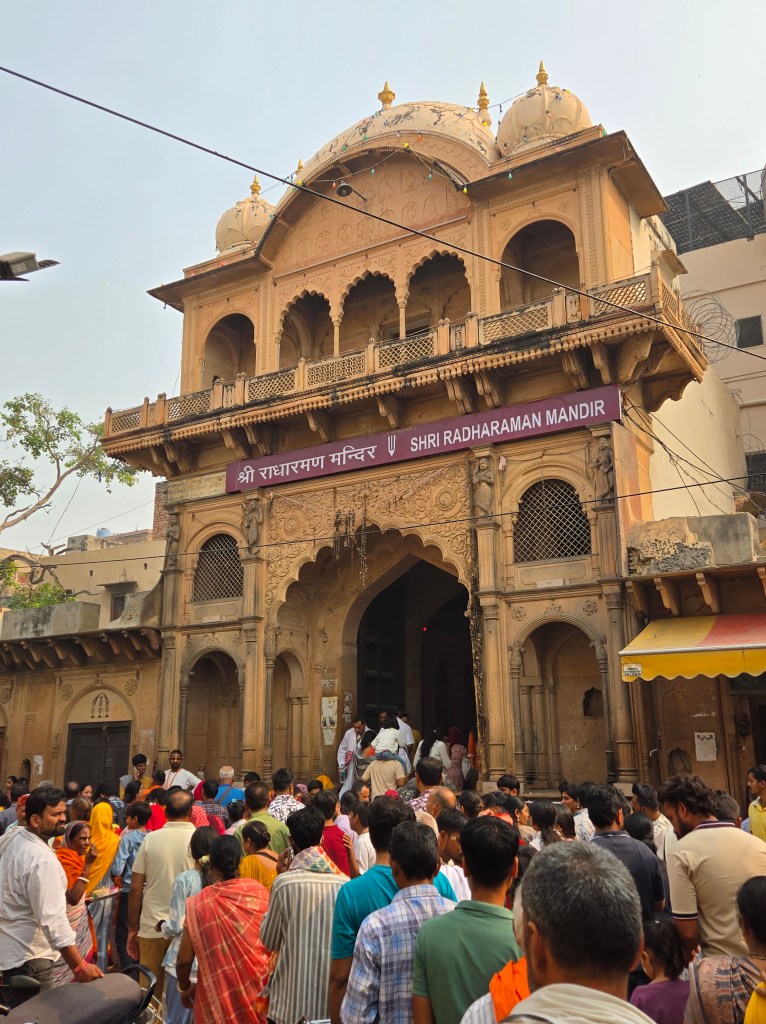
Forty-five minute away from me in the San Francisco Bay Area, every week, a Kṛṣṇa temple fills to the brim with immigrants working in tech originally from West Bengal, Hyderabad, and Mumbai. At the front of the room, teaching Kṛṣṇa Kaṭha (the sacred stories of Kṛṣṇa that are the heart of the entire tradition), is Vaisesika Dasa, a White American guru who looks like one of my father’s friends in his prime. He effortlessly quotes Gītā from memory, and his majority-South Asian congregation addresses him as “Maharaja,” a term of great respect for Vaiṣṇavas. So the reality is that it is even worse than Macaulay could have ever imagined! Not only have “Europeans” abandoned the shelves of their own libraries, but they are even inspiring new levels of devotion in the “native literature of India” amongst the natives themselves! Perhaps when South Asians visited London in the 19th century, Macaulay assumed they would be overwhelmed by the superiority of British ways that they would abandon someone like Rūpa for a solid grounding in Berkeley and Locke. But now the “Europeans” of the 21st century have gone native and teach the books of Rūpa to the immigrants so they no longer even want to read Berkeley and Locke! East is West and West is East, and the twain met a long time ago.
As for me, I am married into a Konkani Sunnī family that originally hails from Mumbai and Southern Maharashtra. For them, economic survival has been the first-order priority, and economic advancement as “doctors and engineers” has been the great hope. Those who immigrated to the USA in the 1960s and 1970s, such as my in-laws (may Allah have mercy on both of them), made a good decision economically. But whether those who stayed in India, those who were muhajirs to Karachi, those who eventually went to Toronto, or us in the USA, the whole khandan (extended family) surely didn’t anticipate me. And when I was 16 years old I did not anticipate them! But that is precisely the point – we often think human life is going to be more simple than it actually is. Human beings go out into the world to secure a better livelihood, and the next thing you know a White American convert to Islam wants to marry your daughter! The world is complex. It is complex because it is made up of more than 8 billion individuals, and all individuals make choices. You cannot reduce an individual – each of us is the building block of everything social. This is why it makes no sense to reduce people to “a mere token of a fixed type,” as Barua laments. There can be no Islam if people do not continuously choose Islam, generation upon generation. There can be no Kṛṣṇa Bhakti (devotion to Krishna) if individual human beings like Rūpa do not believe what Caitanya taught him, and then pass it on in Bhaktirasāṃṛtasindhu all the way until 2026. That is why no one worships Zeus or Thor anymore – no individual human being is willing to dedicate their life to embodying that worldview. The option is literally there on the table – I could worship Zeus if I wanted to, but there is no one left on planet Earth to try to convince me that Zeus is real. At one point in history Zeus/Jupiter must have seemed so invincible, like a structure that can never be torn down. But all that is left are statues and paintings and literary representations of who Zeus used to be in the minds of human beings thousands of years ago.
Contrary to the extinction of Greek religion, there are more people worshipping Allāh and Kṛṣṇa right now than at any other time in human history. In addition, the demographics of those individuals who choose to do so as Muslims or Vaiṣṇavas are more diverse than at any time in human history. The Qurʾān and the Gītā, both of which claim to be the words of an All-Powerful Lord, have stood the test to time. They are more classic than the plays of Shakespeare, which are only five-hundred years old. Do one billion Chinese speakers even care about The Merchant of Venice? To be honest, I have no idea, but I have met both Chinese Muslims and Chinese Vaiṣṇavas that care a lot about the Qurʾān and the Bhagavad Gītā. Maybe you didn’t realize all of this until you read this essay, but now that you do, what does that mean for you? Well, I can’t tell you exactly what it means, because I am just one embodied subjectivity. But I can tell that while I am pleased with Allāh as my Rabb and Muḥammad as my Nabī (may blessings and peace be upon him and his family), I also find myself continuously growing through trying to meet the challenge of engaging with other individuals who are pleased with Kṛṣṇa as their Bhagavān and with Caitanya as their Avatāra. We share the same planet (Earth). We share the same language (English). We share the same polities (the United States of America, the United Kingdom, the Republic of India, etc.). We share the same metropolitan areas (The San Francisco Bay Area, London, Mumbai, GTA, etc.). We both have centers at Oxford to represent our faiths at an academic level in British higher education. The list goes on and on, but more importantly we each share a sense of devotion to and reliance upon a Living, Knowing, Seeing, Hearing, Willing, Powerful and Merciful Being Who created all of this and all of us. Not an abstract Force that binds us but does not speak for Itself, but rather breaks through the cacophony of human voices to utter a Recital (qurʾān) or a Song (gīta). Of course I do not mean to downplay the significant differences in our cosmologies, soteriologies, eschatologies, theologies and epistemologies, but it is to say that what we share is deeply meaningful. And it is only through elucidating what we share that what is different takes on more robust meaning. To me it is absolutely essential to face Makkah in prayer year after year, and like Muhammad Akram at the International Islamic University of Islamabad I do not take seriously Ramakrishna’s claims to have discovered the essence of Islam after cosplaying as one of us for a few weeks. I do not need the syncretism and reduction of boundaries between Hindus and Muslims of figures that Barua mentions like Kabīr – if I did, I would not have chosen Islam in 1998 and I would not continue to identify as Muslim in 2026. Like Aunty Noor, I do not prostrate (daṇḍavat) before the mūrti the way the devotees of Kṛṣṇa do, and would only do so should I become convinced that Rūpa was more correct about the path to God than Muḥammad. I am free to chose, and in my freedom I chose to submit to Allah and the Messenger of Allah, and understand very clearly the boundaries of normative behavior that defines the cumulative tradition of Islam.
In chapter 5 of my book, I explain how the word dīn in Arabic can be glossed as something that everyone has/does, and it is a far more compelling term than the far more recent English word “religion.” In theory, I am interested in all human beings, how they chose to use the bodies they have been given, and how they justify the choices they have made, for that is their dīn. Because I know who I am, what I believe, and what I have to do. If life gets hard I will just do that on my own until my death. But if I am blessed with the time, the interest, the finances, and intellectual capability to be aware of the radical diversity of those who are not me, then is not that too also part of my contemplation of God, who brings about all that is through the existential decree (ḥukm takwīnī)?! It gives me no anxiety that way it seems to for the graduates of IUM, and I do not think it caused al-Bīrūnī anxiety either. After reading Barua’s essay, I have a little more insight into why he chose to become an academic scholar of the Hindu tradition, and it seems that he did so for very different reasons than myself. And that is fine, because Barua is Barua and Coolidge is Coolidge, even if we are both waves in the shoreless sea of Being. Why? Because it is worth visiting Kauai and experiencing those waves, and it is worth traveling to Goa to watch those waves too. Waves are like snowflakes – they are never the same. Some are terrifying in their majesty (jalāl/aiśvarya), some fill the heart with their beauty (jamāl/madhurya), and to just keep repeating that the waves are the same water as the rest of the ocean is the most uninspired observation of all. It is true that in the long run “we are all dead,” as Barua puts it. But Caitanya’s response to that truth was to pray to live forever in the service of Kṛṣṇa, as related in the famous śikṣāṣṭakam prayers.The Muslim too awaits an endless future where Allāh is always there, always akbar. Who knows what waves of devotion are yet to wash over the servant (ʿabd/dāsa) in realms yet unseen?!
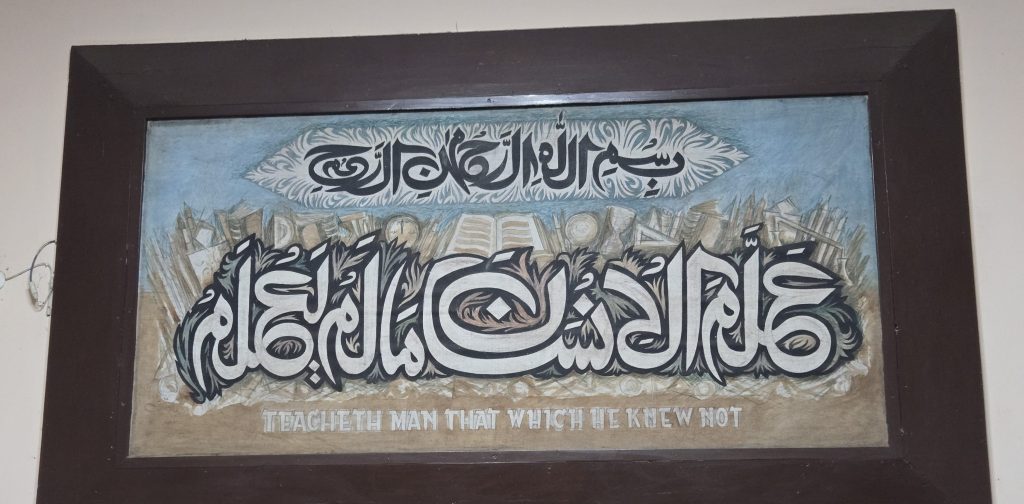
But in the here and now, I have my hands full with learning more about the devotees of Kṛṣṇa here on planet Eart, both those who reached the end of their biological lives in the last 500 years and those who are still breathing like me, at least for now. I have always believed that civilizational excellence depends on a healthy sense of the division of labor, and I do not do more than I am capable of doing. I can speak and write about Islam, both in its Sunnī and Shīʿī traditions, and I can speak and write about Caitanya Vaiṣṇavism in specific and the Hindu tradition in general. Al-Bīrūnī did not really know anything about Buddhism, and I only know slightly more. In the Qur’an, Allāh says, “The One Who taught humanity by the pen, taught humanity that which they did not know (alladhī ʿallama bi’l-qalam / ʿallama al-insāna mā lam yaʿlam),” but I can only read so much in the one lifetime that Islam teaches me I have to use wisely. I do not have time to do a second PhD in Buddhism, nor do I have the time to get up to speed on the details of Śaiva Siddhānta canonical texts. And that is okay, because Allāh does not burden me with more than I can bear. Islam’s answer to the human question is in the Qurʾān, and everything we fallible Muslims produce is just commentary. What I do is not farḍ ʿayn, the basic responsibilities of a Muslim even if they are an uneducated pauper. It is a privilege and I am privileged, just as al-Bīrūnī was in the 11th century, and I take that privilege seriously. Being open to diversity does not make me an agnostic, not by a long shot. I came to Islam as a student of global history and comparative religions, and being Muslim has only made that global and universal intellectual concern all the more true, good, and beautiful. The Qurʾān makes it clear that I have no inherent advantage over the uneducated pauper in attaining the promised Garden (al-Jannah) just because I have a PhD. What God looks at is my heart, as per the famous prophetic ḥadīth. For all of our bodies were not made by us, nor was the Earth upon which we live out these journeys. All we have is our hearts, the dreams they contain, and the choices we make in pursuit of them. Christians, Muslims, and the devotees of Kṛṣṇa all concur that there is an All-Hearing Lord who knows the secrets of our hearts, and so we are never alone. So I close with asking the Lord of all hearts to guide us all, for as the Qurʾān states, “all praise is due to God Who guided us to this, and we never would have been guided had God not guided us.”
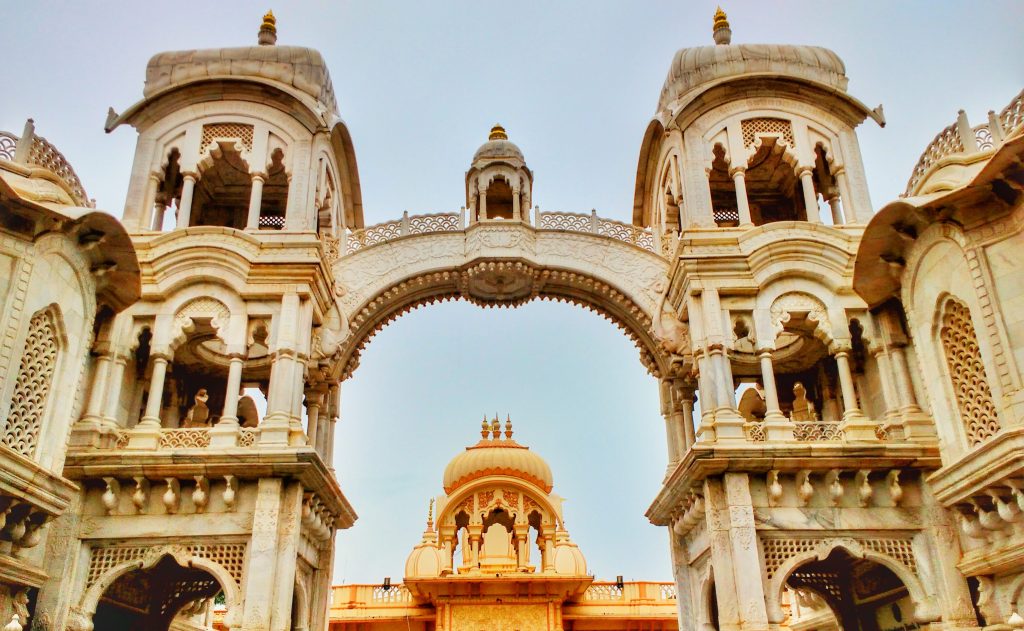
Cover image: ISKON Temple, Vrindavan; Source: https://en.wikipedia.org/wiki/Vrindavan#/media/File:Iskon_Temple,_Vrindawan.jpg
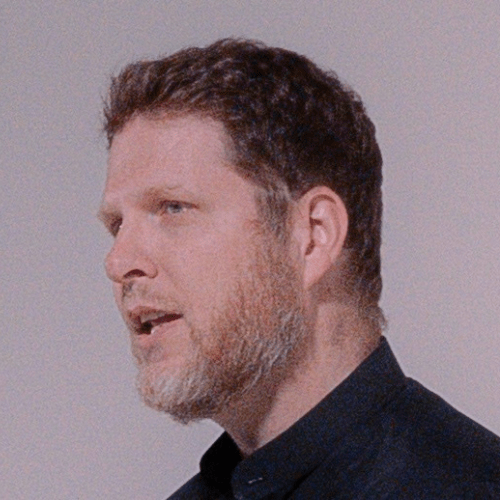
R. David Coolidge is the author of Hindu Bhakti Through Muslim Eyes: Islam and Caitanya Vaiṣṇavism in the Twenty-First Century. He received a PhD from the Graduate Theological Union and serves as Research Faculty for Bayan Islamic Graduate School. He was previously at Brown University as the Associate University Chaplain for the Muslim Community, Dartmouth College as the Muslim Advisor, and New York University as an adjunct professor of Islamic law and ethics. He has served on the boards of various American Muslim nonprofit organizations, including Zaytuna College, Taleef Collective, and Al-Kisa Foundation. As a preacher, he has given hundreds of sermons/talks and led prayers in dozens of Sunnī and Shīʿī masjids around the country.


