
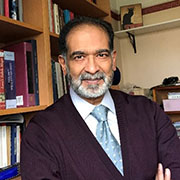
Recommended by Chakravarthi Ram-Prasad, Fellow of the British Academy and Distinguished Professor of comparative philosophy and religion, Lancaster University, UK. Author of Divine Self, Human Self: The Philosophy of Being in Two Gita Commentaries.
Interview by the Editor, Saad Ismail.
Professor Ram-Prasad, what are the three books on Hindu philosophy which you would recommend and why?
I’m interpreting philosophy very broadly because, of course, that is a category that we can work on.
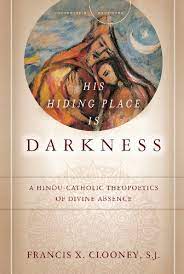
One book is by Francis Clooney, called His Hiding Place is Darkness, which is a comparative study of the theology of absence in Catholic theology and my own Sri Vaishnava tradition. I think it is exemplary of somebody coming from a committed faith stance as a Jesuit, but who has spent his entire life deeply immersed in the Sanskrit, the Tamil and the other languages in which the Sri Vaisnava materials are written. So, that sense of respect and mutual illumination I think is a model for the kind of deep comparative theology that we ought to be undertaking.
In a slightly different vein, I would recommend Steven Hopkins’s theological-poetic work called Singing the Body of God which is a beautiful set of translations with his own commentary on some of the diverse poetic works of a very important thinker of the Tamil Sri Vaishnava tradition called Vedanta Desika.

Now, Desika was a great philosopher, a very rigorous and analytic thinker who drew on earlier systematic reasoning to develop a theology of God as ‘Vishnu with Sri’ – the composite sort of theology of Sri Vaishnavism. But he also wrote, again, in different languages – in Sanskrit, in Tamil, in Prakrit – very beautiful many-layered works of poetry and drama. Steven Hopkins translates some of that poetry, in particular looking at Desika’s enactment of a very important form of worship, which is describing the beauty of God.
These two books are concerned either comparatively or directly with the Sri Vaishnava tradition of Hinduism. Another book I would recommend, and I think you might have in fact had a discussion on this in a previous recording: Anantanand Rambachan’s The Advaita Worldview.
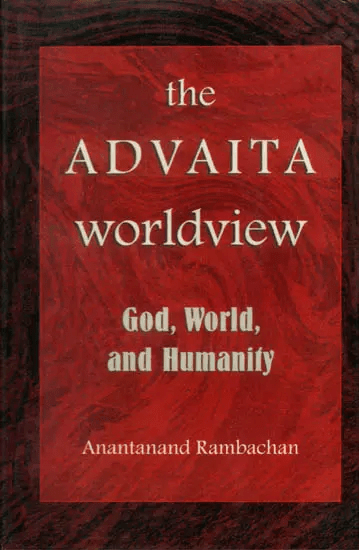
Now, I myself have written philosophically about the Advaita Vedanta for a long time. But I think Anantanand Rambachan very powerfully brings out what it is to have a modern or contemporary Hindu way of living which is at the same time faithful to an Advaitic worldview. Now, that’s very interesting because the way in which the religious life of a Hindu and the philosophical system of Advaita came together is a long and complex story. A lot of the philosophical work that looks back on the major texts from the 8th century to, say, the 15th or 16th century tends to look at it much more philosophically. Whereas, what Rambachan does, is to say, well, how would it be to live as an Advaitin today in a religious manner? So, I think that’s a very powerful example of a contemporary theological way of living as a Hindu.
 Project Noon
One response to “Top Three Books on Hindu Philosophy”
[…] Top Three Books on Hindu Philosophy […]
LikeLike