
About
Project Noon is a forum dedicated to exploring modes of inter-religious dialogue across South Asian socio-religious traditions. We seek, in particular, to bring scholarship from the two academic fields of Islamic Studies and Hindu Studies into creative conversation with each other.
First and foremost, we hope to understand a particular tradition on its own terms, as articulated by its leading scholars, and without seeking prematurely to subsume it under the categories of the other tradition. This practice of dialogical hospitality entails that we retain the creative tension that such comparative work demands, in the hope that through inhabiting this ‘liminal space’ (dihliz), we can creatively develop new languages and sensibilities for inter-religious relations for our future.
What We Do:
We curate academic scholarship on South Asian socio-religious traditions for an interested general audience. We engage with leading scholars in the field through extended podcasts, in-depth essays and reviews, and webinars and workshops.
While the outreach of Project Noon is global, its work has been guided by Saad Ismail at Aligarh Muslim University (India) and Ankur Barua at the Faculty of Divinity, University of Cambridge (UK). It includes regular in-person and online events in collaboration with scholars from both institutions. We have enjoyed the support of the Cambridge Interfaith Programme (CIP) in the past and remain in active collaboration with them. You can learn more about some of our past events here.
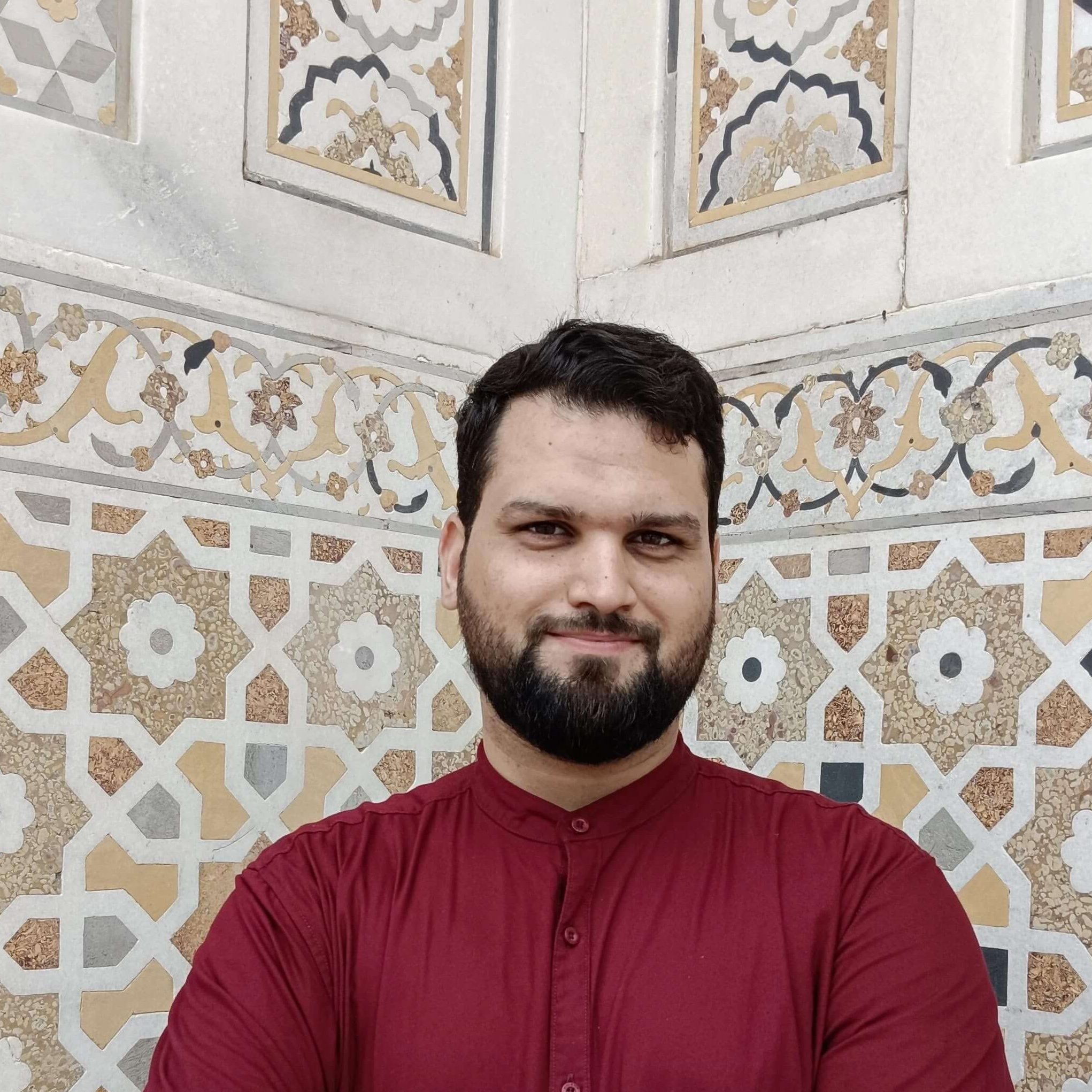
Dr. Saad Ismail
Founder and Editor
Dr. Saad Ismail, MBBS, MD, is a Senior Resident at the Department of Physiology, Jawaharlal Nehru Medical College, Aligarh Muslim University, India. He was the recipient of the Cambridge-Hamied Visiting Lecture grant in 2024 to visit the Faculty of Divinity at the University of Cambridge. His writings and reviews have been published in journals such as The Journal of Hindu Studies and Critical Muslim. His scientific research focuses on the role of sleep in memory consolidation.
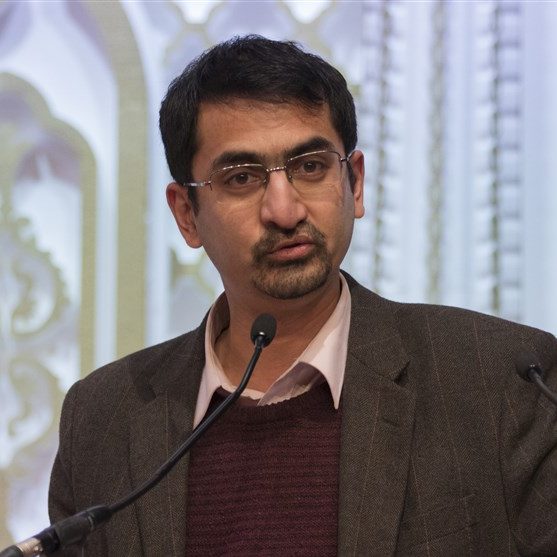
Dr. Ankur Barua
Contributing Editor
Dr. Ankur Barua is University Senior Lecturer in Hindu Studies at the Faculty of Divinity, University of Cambridge. After a B.Sc. in Physics from St. Stephen’s College, University of Delhi, Ankur read Theology and Religious Studies at the Faculty of Divinity, Cambridge. His primary research interests are Vedāntic Hindu philosophical theology and Indo-Islamic styles of sociality An integral dimension of Ankur’s research is the comparative philosophy of religion. He studies the theological and the socio-political aspects of Hindu–Christian engagements. In recent years, his research focus has moved to an exploration of the intersections between the idioms of bhakti, yoga, tawḥīd, and taṣawwuf on the multiply-stratified postcolonial landscapes of South Asia.

Luke Wilkinson
Associate Editor
Luke is a graduate in Political Thought and Intellectual History MPhil at the University of Cambridge, for which he wrote a dissertation on the philosophy of Muhammad Iqbal. He is currently pursuing a PhD in Theology and Religious Studies at the University of Cambridge, working on the history of Muslim-Christian relations in Malta, where he grew up. He works as Contributing Editor at the Journal of the History of Ideas Blog and has written on Iqbal as well as Islamic philosophy and mysticism more broadly for the Journal of the History of Ideas Blog, Manara, and for the forthcoming publication of Critical Muslim.
Why “Noon”?
The cup-shaped Arabic letter n/ ‘ن‘ (noon) symbolizes the inkwell, which allows the pen (qalam) to create further symbols. It represents that which precedes all articulation and to which all articulation aspires. According to certain traditional commentaries, it is an allusion to a Divine name. More poetically, the two endpoints of its arc (ن) can be seen to symbolize the earliest (Vedic) and the latest (Qur’anic) revealed traditions, representing two points in the cycle of time that, although distinct, share a common orientation towards the transcendent – the dot at the center (ن) that is above both. The semicircular Arabic ن (n) when coupled with its homophonic counterpart in Sanskrit (ण्) completes the figurative circle.
 Project Noon