
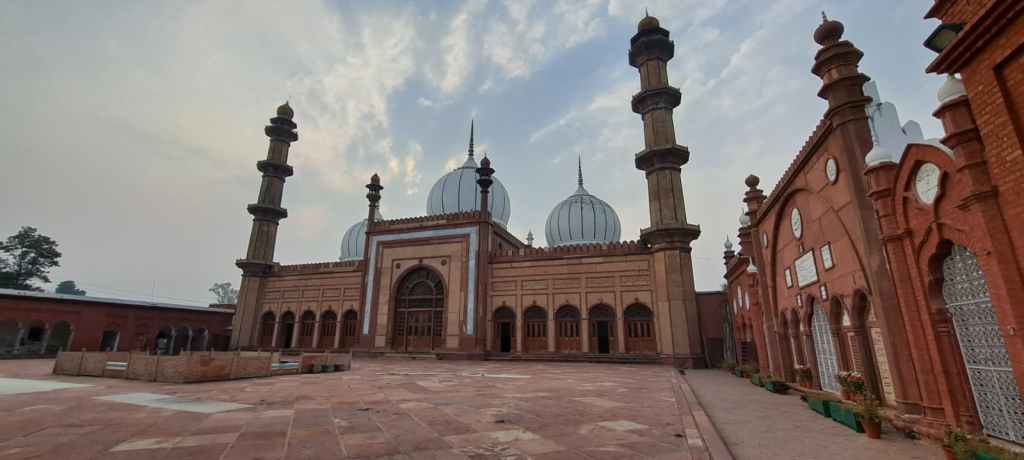
by Ankur Barua.
Note from the Editor: With this essay, we seek to initiate a discussion forum on the sensibilities with which one undertakes the study of the religious other, the promises and perils surrounding Hindu–Muslim relations, as well as what it means to be a Muslim in India today.
The heart is our intimate stranger — it is the living centre of both our everyday thoughts and our unexpressed yearnings. It drives us here and there in our worldly transactions, but its subtle depths remain hidden beyond our conscious gaze. We think we know our own selves, yet we do not — we remain exiled from our own home. The heart is our zone of the uncanny.
I begin these reflections on my engagements with Muslim milieus with the motif of the heart (hṛday, qalb) because it is central to the Hindu and the Islamic worldviews that I research. With the help of co-authors, I explore theological resonances across Hinduism and Islam (for instance, the cosmologies of Rāmānuja and Ibn ʿArabī) and everyday styles of socioreligious imagination (for instance, Muslim recalibrations of the Hindu idioms of devotion).
From one perspective, these comparative inquiries are part of my academic job description at a Faculty of Divinity. However, this description does not explicitly state that I have to explore Hindu forms of being and becoming directly in conversation with Islamic visions. Indeed, I take the disciplinary category of “Hindu Studies” to mean also “Studies of al-Hind”: that is, socioreligious interactions across individuals and groups in Hindustan. In walking down these scholarly pathways, I am reminded of Wordsworth’s dictum that the child is the father of the man—my faltering ventures into Islamic terrains are shaped by the mysterious gravity of a few memories from my childhood years.
One of my earliest memories is that of my mother telling me, on a hot summer’s day, that she had visited her close friend — a Muslim lady whom I will rename “Aunty Noor”.
I was about to leave when your Aunty Noor said: “Let me go to the nearby marketplace and get some cakes for your two sons”. She rushed out and soon returned not with two, but ten, of those cakes that you like so much!”
I vividly remember the light dancing in my mother’s eyes as she opened the box with a soft exclamation of delight.
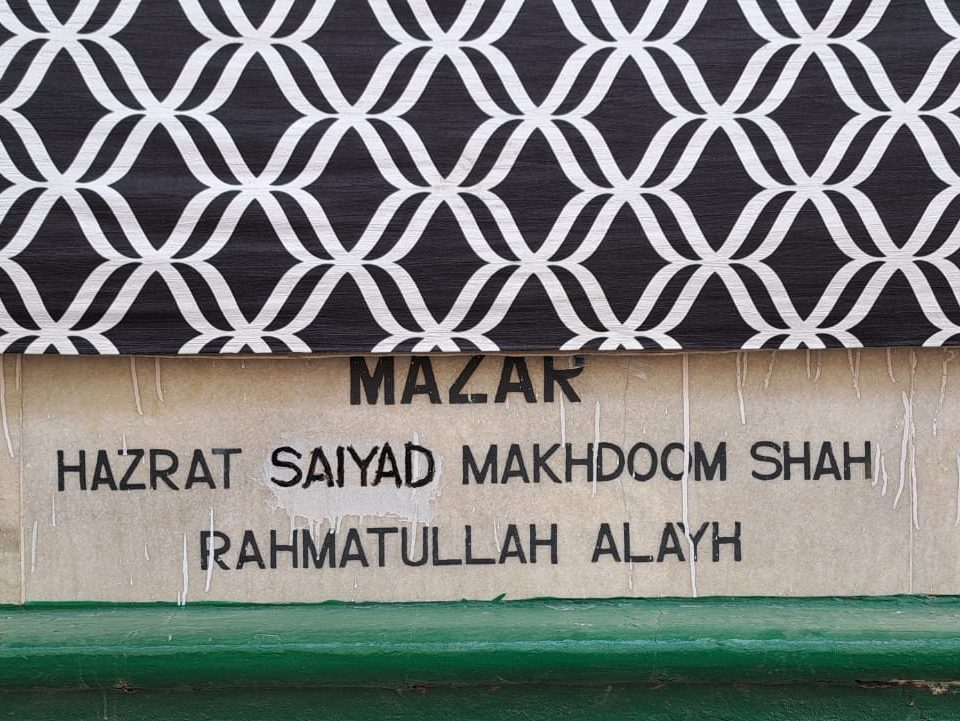
Around this time, an uncle took me to the dargāh of a Sufi saint called Āzān Fakīr; this dargāh is called “Powa Makka” in Assamese. The name means “a quarter of Mecca”: by offering prayers at this shrine, pilgrims are said to receive a quarter of the spiritual reward of visiting distant Mecca. At this site of a localised Islam, my uncle whispered to the elderly Muslim man sitting at the threshold of the shrine: “Listen, we are not Muslims”. It turned out that this somewhat apologetic remark was out of place: the white-bearded man smiled gently, held my uncle’s hand, and led him into the shrine.
Some of these Islamic milieus are sites of a style of music called zikr (“songs of remembrance”). I received a training in Hindu bhajans and the songs of Rabindranath Tagore; I unselfconsciously picked up several zikrs from my wider sonic environments. Running through these devotional streams are several common themes: the impermanence of the material world, the erasure or reformation of egocentricity (nafs, ahaṃkāra), the return to the divine reality (Viṣṇu, Allah) who is the safe haven across turbulent oceans, the compassion of the spiritual master (guru, pīr), and the polished heart which is the home of the beloved friend.
Around two decades after these formative experiences, I began to systematically study Islamic theology and the Muslim cultures of South Asia. Against the psycho-existential backdrops I have sketched, I have often pondered on an intriguing aspect of majoritarian-minoritarian dynamics, both in India and in Britain — the minority always bears a disproportionate burden of having to prove that it too belongs, it too matters, it too is legitimate. Why is this so? Here is a relatively straightforward answer based on my experiences across Hindu and Muslim settings of everyday life: “deviance from the norm stands out more immediately in the minority than in the majority”.
Let’s assume that on an island with 10 people, the received norm is to wear a blue shirt on Sundays. Let’s say that 8 of these 10 people belong to the majority and 2 of them belong to the minority. Finally, let’s say that 1 person out of the 8 people challenges the rule of wearing a blue shirt. Now, 1/8 is roughly 13% of the population: so, roughly 13% of the majority is deviant. However, even if only 1 person in the minority of 2 people were to challenge this rule, this would result in 50% of the minority being viewed as deviant. So, departure from the norm is more readily visible in the minority than in the majority, which generates the anxiety that the minority is essentially deviant. Deviance within the majority may be welcomed, even celebrated with a frisson of excitement; deviance within the minority may be policed, contained, and eliminated.
Thus, from certain Hindu majoritarian perspectives, it is common to distinguish between “good Muslims” and “bad Muslims” on the basis of various stipulative criteria; rarely, however, is such a categorical distinction proposed between “good Hindus” and “bad Hindus” even though the criteria may be exemplified among specific Hindu individuals too. The majority generally remains unaware of its blind spots that reproduce the asymmetrical distributions of socioeconomic power underpinning the criteria in the first place. The history of humanity is the tragic record of how the majority’s claim to civilization is driven by its own barbarism towards its minorities.
If that is so, what can we do to foster or cultivate the virtue of hospitality towards the socioreligious other: the stranger, the subaltern, the alien, the migrant? This question is of such existential significance to me that I am working on a series of three novels where I situate characters from Hindu, Muslim, and Christian backgrounds on diverse socioeconomic and sociocultural horizons and make them embody teachings from various scriptural texts. My second novel, The Fragrance of Green Saris, is centred on the lives of four Muslim sisters who engage in diverse ways with their Hindu neighbours. However, long-range sociohistorical problems cannot be solved at the stroke of a pen simply by inventing characters in historical fiction. Various types of real-world asymmetry continue to crisscross our human landscapes even if, and even when, we reach out to the socioreligious other through a gracious offer of friendship.
An irony of our postcolonial condition in South Asia is that while India is said to be the primordial home of religion (for better or worse), there are very few academic institutions where religion is discussed in a historically informed, culturally sensitive, and philosophically reflective manner that does not directly require religious affiliation. If you want to learn about Hinduism, you may have to go to a Hindu institution which is only concerned with making this declaration: “Hinduism is the quintessence of all spirituality”. Likewise, if you want to learn about Islam, the destination may be an Islamic institution which only seeks to establish this claim: “Islam is the absolute truth”. In my estimate, there is no problem per se with such institutions: I would even say that we need pedagogic spaces where a scripture-rooted perspective is articulated, developed, and defended. However, what if someone who is Muslim says: “Never mind whether or not Hinduism is the most wonderful vision of self and society; where can I learn something about the key values, ideas, and practices of a Hindu way of life?”. This query points to a great lacuna in our systems of higher education: an absence that is shaped by our postcolonial inheritances relating to anxieties about discussing religion in the public square.
Against the backdrop of this institutional absence, suppose we look at Hindus and Muslims from a symbolic height of 40,000 feet: what would we see? Here are my hypotheses.
Across Islamic visions, there are two scriptural strands which are sometimes sharply opposed to each other and which sometimes coexist in an uneasy tension within the same text, tradition, or teacher. The first is “the anxiety of influence”: a deep worry that an immersion in Indic cultures amounts to a departure from the narrow and straight path of truth. The second is “the will to hospitality”: the confident stance that an immersion in Indic cultures is precisely an expression of commitment to the narrow and straight path of truth.
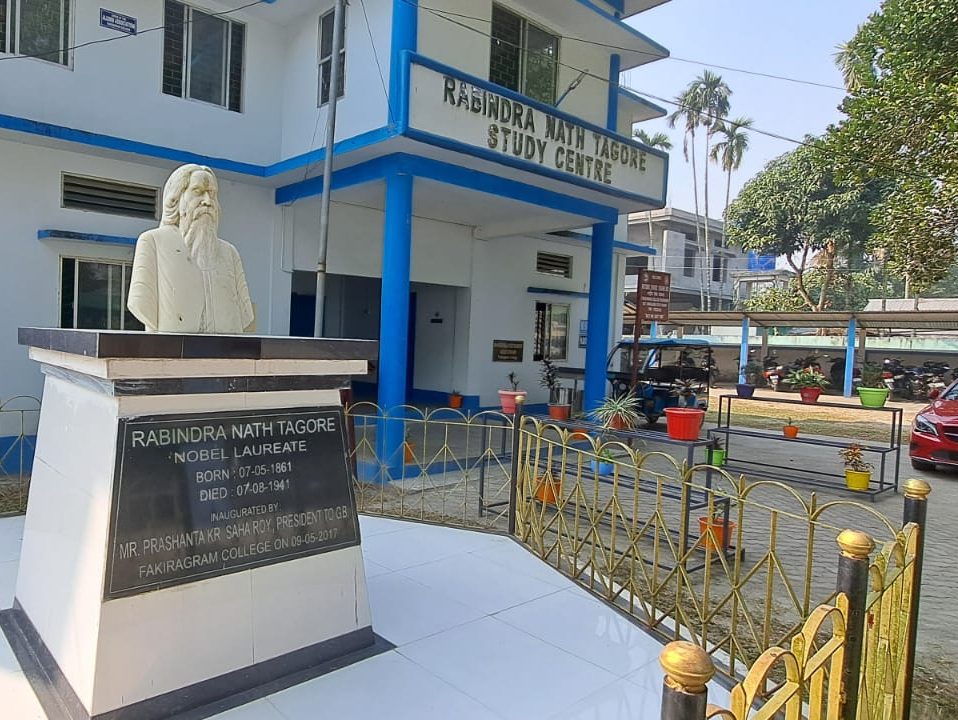
Again, across Hindu visions, there are two scriptural strands which are sometimes sharply opposed to each other and which sometimes coexist in an uneasy tension within the same text, tradition, or teacher. The first is “the vision of austerity”: certain codifications of the Hindu dharma characterise the non-Indic outsider as a hostile enemy or a resident alien. Thus, the Manusmṛti (c.200 CE) declares: “The range of the spotted antelope is the land fit for sacrifice; beyond that is the land of the mleccha (the foreigner with whom people of dharma must not have any exchanges)”. The second is the “vision of abundance”: the dharma, which is not exhaustively codifiable, is said to be the universal umbrella that encompasses the whole world under its spiritual canopy. Thus, the motto of the university established by Rabindranath Tagore declares: “where the world makes a home in a single nest”.
All these scriptural strands are mediated or modulated by a spectrum of constraints such as socioeconomic asymmetry. In an ideal world, a Hindu “vision of abundance” would live happily alongside a Muslim “will to hospitality”. However, in real-world circumstances, a Hindu “vision of austerity” has often collided with a Muslim “anxiety of influence”. Why is it that Hindus and Muslims alternately speak the language of “anxiety” or “hospitality” or the language of “austerity” or “abundance”? More specifically, why do some Hindus speak with the Manusmṛti’s language of anxious prohibition and why do some Hindus speak with Tagore’s language of warm reception? Here is one relatively straightforward answer: “we are shaped by a range of variables such as our psychological temperament, our childhood upbringing, our social location, and so on”.
Against this complex backdrop, what may we do to initiate or reinforce forms of dialogical outreach across Hindu and Muslim borderlines? To begin with, we face a daunting challenge: the burden of history filled with incidents of hostility or indifference, where these incidents have been expressions of long-range structures of material deprivation. Human history is the complex narrative of how mortal beings compete for scarce resources, where this competition is shaped by the language of “outsider” and “insider”. Depending on the language being invoked—region, nation-state, caste, class, race, or religion — we can alternately find ourselves on the wrong side or, if we are lucky, the right side of a divide.
Once this language of division becomes “normalized”, it can generate various types of violence vis-à-vis whoever is perceived or represented as the outsider. It can instigate physical brutality at a quotidian level; it can also structurally legitimise such brutality as collateral damage in the pursuit of the greater good. At these fateful intersections of covert and overt violence, people can progressively become desensitized to the enormity of the cruelty that they endorse or promote in a matter-of-fact manner. In these crucibles of hostility, an individual’s distinctive individuality is eradicated — an individual is reduced to the social status of a mere “token” of a fixed “type”. Thus, violence inflicted on a particular “token” is projected or perceived as violence oriented to the “type”. In this relentless logic of essentialization, it is but a short step from “violence committed by or on a member of a group” to “violence committed by or on the group itself”.
Who or what can act as “circuit breakers” in these progressively intensifying spirals of antagonism? This is a complex question to which there is no single-factor analysis. We need the collective will to transform institutional structures that foment or legitimise violence, and we also have to ensure that children acquire the habits of heart to perceive otherness not as intrinsic threat but as promissory invitation. As it so happens, top-down institutional change and bottom-up existential transformation often fail to meet in the middle. You might set up a school in a Hindu locality and stipulate that at least half of the students have to be from Muslim backgrounds; this is because you happen to believe that our affective powers are crucially shaped by our early friendships. But our best laid plans are often wrecked on the rough road of reality—how many Hindu parents would send their children to such a school? Thus, the reconstruction of the broken middle is the destination, whether historical or eschatological, on a very long road towards durable peace.
In this sociopolitical context, here are some notes from Tagore’s introduction to Maulvi Muhammad Mansuruddin’s Hārāmaṇi (1930):
The Muslim foreigners came with weapons, and it was difficult for the people of the land to mix with them. This initial asymmetry was related to worldly concerns about rights and the enjoyment of the natural resources of the country. When a ruler is from a foreign country, such worldly oppositions are inevitable. But during Muslim rule the intensity of this opposition gradually weakened because Muslims made this country their own, and therefore they and its inhabitants became mutual associates who enjoyed the resources of the land. Moreover, it will be seen that the greater proportion of Muslims in this country are Hindu in terms of their ancestral roots and Muslim in terms of their religious identity. Therefore, both groups have the same rights to enjoy the resources of the country. But an intense opposition remained in religious matters. Some holy individuals were born in both Hindu and Muslim communities from the time of the beginning of Muslim rule, and they were engaged in generating, through their lives and their teachings, a harmony across these oppositions. The problem was indeed difficult, and their arrival too was remarkable. It is in this way that the divine power brings out what is most sublime in humanity through difficult tests. We have continuously seen this greatness in India, and we hope that its stream has not died out even today. In those liberal minds the two opposed streams of Hindu and Muslim have become united, and in the union of religion in those very minds the true spiritual pilgrimage of India has been established. Such pilgrimage sites are not restricted to any particular country, and they remain established for all time. These pilgrimage sites are established forever in the lives of Rāmānanda, Kabīr, Dādu, Ravidās, Nānak, and others.
A few years earlier, in 1923, Tagore had delineated these fault lines in this way:
Both Hindus and Muslims have divided humanity, in their different ways, into groups of the self and the other (ātma o par) by using religious categories. For Hindus, the social others—the foreigners (mleccha) and the untouchables (antyaja) — are eternally other and they will not invite these outsiders into their homes. As for Muslims, they too regard their religious others as intensely other, but are happy if they succeed in bringing them into the fold of their faith. Thus, we have two groups living side by side within one country—Muslims cannot be bound to Hindus through a deep relationship (ātmīẏatā) for they regard them as unbelievers (kāfer), nor can Hindus be bound to Muslims through a deep relationship for they consider them to be foreigners.
Note that Tagore neither romanticises nor demonises Hindu-Muslim engagements; indeed, these two sections (translated by me from the Bengali) are variously interspersed with the conceptual idioms of “vision of austerity”, “vision of abundance”, “anxiety of influence”, and “will to hospitality”. Deep fault lines across Hindu and Muslim social spaces are modulated by various dynamic variables; subjectivities of friendship have to be developed not by bypassing them but by working through them.
At these crossroads of culture, politics, and religion, everyone becomes implicated, directly or indirectly, in entrenched patterns of asymmetry. I have set out to work on a novel involving four Muslim sisters; but can an Indian Muslim confidently venture to write a novel about four Hindu sisters with the title The Fragrance of Orange Saris? I have taught myself to sing numerous zikrs and na’ats (songs of praise to the Prophet Muhammad); but what if an Indian Muslim started singing Hindu devotional songs at public gatherings? My Islamicate identity is something of an existential luxury (I don’t have to study the Qur’ān, and the theological writings of Ghazālī and Mullā Ṣadrā); but what if an Indian Muslim perceived a requirement to read the Bhagavad-gītā at university as an exercise in institutionalised homogenization? My childhood was shaped by a fortuitous intersection of a “vision of abundance” and a “will to hospitality”; but what if my Hindu grandparents had been killed in 1947 by a group of Muslim assailants?
To such difficult questions with open-ended textures, I seek answers through the varied media of social history, cultural studies, theological commentary, and (my) historical fiction. However, when I visit Aunty Noor today, I do not go in direct pursuit of such answers: I just sit and listen to her intricate narratives of ancestors, friends, and grandchildren as she plies me with food. Over the years I have become, more or less, a vegetarian but I would never refuse her chicken biriyani.
In one sense, so much has changed—in those days of innocence, I did not quite comprehend the significance of the signifiers that her house is in a quarter populated by women who cover their heads, many of the walls are painted green, and the call to prayer resounds through the blue skies from the mosque just thirty feet away. In another sense, not much has changed—she intersperses verses from the Qur’ān with a running commentary on the spiritual significance of Hindu yoga and tantra. Perhaps this is why I have never felt that I am simply a “non-Muslim” in her presence; in return (Urdu: badlā), this is why I try to speak to Muslim friends, acquaintances, and students by using distinctively Islamic idioms.
Today, Aunty Noor tells me that she occasionally visits a Kṛṣṇa (Krishna) temple in the neighbourhood. She sits at one end of the prayer hall and listens to the devotional songs (some of which I myself can sing), but does not bow to the icon at the end of the congregational singing (kīrtan)— she explains to me that she offers such prostration (sajdā) unto Allah alone.
As I walk down the narrow alley filled with brightly-lit jewellery shops on both sides, the maghrib prayer fills up the heavy evening air. The seeds of two momentous questions—“do Hindus and Muslims ultimately worship the same God?” and “how may we bring about relations of mutuality among Hindus and Muslims?”—were planted in my heart on this very alley many decades ago.
Along various stages and stations on my spiritual highway, I have begun to understand myself as an “agnostic Roman Catholic”: I am agnostic about the doctrinal truth-claims made by the Vatican even though my religious subjectivities remain rooted in the symbolism of Christ’s suffering love as enacted by Saint Francis of Assisi. My Christianity is embodied in these words (misattributed to Francis): “preach the gospel at all times and, if necessary, use words”.
In the hereafter (whatever that is and wherever it is located), will I again somehow meet both my Hindu mother and Aunty Noor? In the evening of my life, this mortal question increasingly haunts my religious quest. Someday, I may get to know as I am already known but, in the meantime, who or what is the signified of these signifiers within the shadows of an enchanted garden?
At the Kṛṣṇa temple, Aunty Noor may have heard this song:
I (Kṛṣṇa) am their mind and wealth at all times,
In this way they meditate on me,
They barely live, separated from me.
With me as their hope the cowherd women live:
“Our Kṛṣṇa will return to us, we will see him again”.
Says this servant of Kṛṣṇa:
“O people, worship the Lord Hari (Kṛṣṇa),
for Hari is the good-hearted (suhṛd) friend”.
When I sing this song, I sometimes wonder who its ultimate recipient is: Kṛṣṇa, who my mother’s tradition would accept as the supreme divinity (bhagavān), or Allah of whom, according to Aunty Noor, Kṛṣṇa is one of the many messengers?
How much mystery can reason bear?
In the long run, we are all dead; but for specific individuals and groups, life is especially nasty, brutish, and short. In the interim, the heart (hṛday, qalb) is everything: it is the living motor of our desires, aspirations, and hopes. What are the grand institutions of this world but the hearts of human beings who have learnt to speak in harmony? From within the nightmare of our history, to begin to have a heart for the other is already to step into the genesis of a new world.
Cover image: The Jama Masjid, Aligarh Muslim University (photograph by Ankur Barua).

Ankur Barua is University Senior Lecturer in Hindu Studies at Cambridge University. He read Theology and Religious Studies at the Faculty of Divinity, Cambridge. His primary research interests are Vedantic Hindu philosophical theology and Indo-Islamic styles of sociality.
 Project Noon