

Recommended by Muhammad U. Faruque, Inayat Malik Assistant Professor at the University of Cincinnati and a Taft Center Fellow at the University of Cincinnati. He also holds a Visiting Scholar position at Harvard University.

Prof. Faruque offers his book recommendations below on the philosophy of the self in Islam and modern neuroscience, a nascent subject area within which Prof. Faruque himself is doing pioneering interdisciplinary work. Including his own monograph on the subject, on which we have a detailed discussion on our podcast, he recommends the work of Mona Jahangiri, Nazif Muhtaroglu, and finally, the scientist and historian Matthew Cobb’s history of ideas of the brain from macabre anatomical investigations to the latest theories that allow us to create artificial memories in the brain of a mouse, and to build AI programmes capable of extraordinary cognitive feats.
- Muhammad Faruque, Sculpting the Self: Islam, Selfhood, and Human Flourishing. Ann Arbor: University of Michigan Press.
- Muhammad Faruque and Mona Jahangiri, “Toward a Neuro-ethics in Islamic Philosophy: Trauma, Memory, and Personal Identity,” Sophia (2024): 1–20.
- Muhammad Faruque, “We are Not Our Brain: How Poets and Philosophers Saw the Immaterial Life of the Self.” Renovatio Spring (2024).
- Mona Jahangiri, The Self and Its Time: Islamic and Neuroscientific: Perspectives in Conversation, Journal of World Philosophies 9 (Summer 2024): 44-61.
- Nazif Muhtaroglu. Religions. Akkirmânî’s Occasionalist Approach to the Neuroscientific Research on the Human Will 2024.
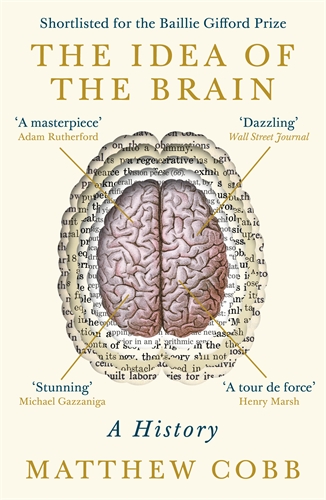
- Matthew Cobb, The Idea of the Brain: The Past and Future of Neuroscience, Basic Books, 2020.
 Project Noon