
Originally published in the quarterly journal Critical Muslim (2022; Hurst Publishers, UK).
by Saad Ismail
If you listen to Sadhguru enough times – as I have – you come away with the impression that spirituality is the only sensible alternative to the regressive and old-fashioned belief in religion. Religions, and in Sadhguru’s view, Abrahamic religions in particular – with all their notions of a traditional creator-god, scriptural morality, and heaven and hell – are well on their way to extinction, or at least should be. In this sense Sadhguru is only echoing the view of the New Atheists such as Richard Dawkins, who have long prophesized and hoped for ‘the end of religion’ and the triumph of science. Sadhguru unthinkingly hops on this bandwagon, since according to him spirituality is closer to science than to religion.
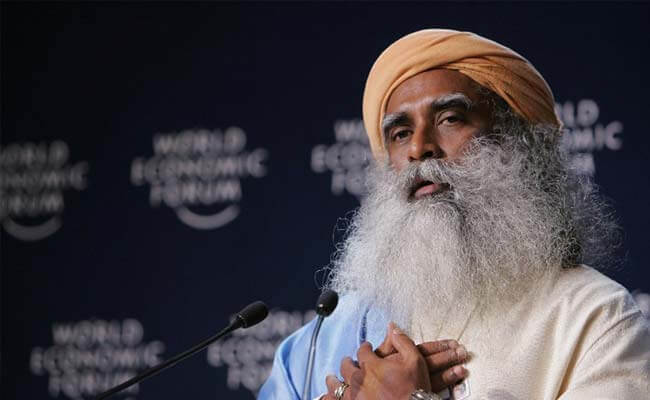
Jagadish Vasudev, better known as Sadhguru, is an Indian spiritual guru of international renown. His Isha Foundation claims that it ‘does not promote any particular ideology, religion, or race, but transmits inner sciences of universal appeal’. The turn of phrase is telling. Spirituality as ‘universal inner science’ is supposed to be the panacea to the particularity of religion, which is itself coterminous with ideology and ethnicity. We will see presently why such posturing can be deeply problematic. Blind to its own particularity, it promises a false sense of universalism that it cannot deliver. It is only a small step from there to associating with oneself the objectivity and indisputability of science, and with the Other the emotionality and dogmatism of belief.
More broadly, Sadhguru’s pronouncements on ‘religion’ lie on the same level of intellectual sophistry as that of Dawkins – which, if I must spell it out, is not a flattering remark at all. But, by rehashing Dawkins-esque views on religion, Sadhguru secures for himself a double victory. Firstly, he can marshal the New Atheist polemics against Abrahamic religions in his favour, and so he has his work cut out for him. Secondly, he garners fans who in their fits of teenage rebellion might have acquired a scepticism of traditional authority, but who – perhaps due to their teenage impatience – might have stalled at that stage, and could hardly sustain a long-term and thorough-going period of critical enquiry and exploration. Sadhguru, very much like Dawkins, panders to the lazy sceptic – one who takes an ahistorical view of his or her own scepticism, considers all religious traditions to be patently false while ironically admitting his or her ignorance of them, and holds a triumphant belief in ‘Western Enlightenment’ values. Although when pressed on this last point, such a person would be at a loss to enumerate what these values actually were, let alone defend them intellectually. In fact, behind this veneer of the rationalist-sceptic, there seldom lies any deep engagement whatsoever with philosophy, religion, or history.
Yet, there is no denying that both Sadhguru and Dawkins hold much appeal. The average follower of either of these figures may also outshine a regular believer when it comes to critical thinking. And, it is perhaps this failure of religious traditions and institutions to empower their masses with independent thinking that serves as the cause of much self-embarrassment for them. At this level, Sadhguru/Dawkins may be seen to perform an important salutary function: to awaken the masses from their uncomprehending slumber. But to be awake is not a one-time action, it requires constantly being awake and vigilant. The waking jolt of scepticism can itself come to sound like a lullaby when one starts becoming complacent and comfortable within the new-found belief-system of ‘scepticism’. The only authentic way to stay awake, therefore, is to be sceptical of one’s own scepticism, and sceptical of that scepticism, and so on, ad infinitum.
Now, as the title of this essay suggests, I am not discussing Sadhguru’s more overt politics. Much deserved ink has already been spilled along those lines. Instead, I seek to lay bare the political posturing of what is generally accepted to be a benign and ‘apolitical’ spirituality.
Let us examine Sadhguru’s ‘spirituality’ more closely. In one sense, he defines spirituality in opposition to religion as noted in the beginning. But in another sense, spirituality in his view is the very kernel of religion itself. Now, if religion is merely a husk, one can easily come to the conclusion that this husk is disposable and essentially useless if one retains the kernel. One has to wonder what this shapeless kernel of spirituality looks like when stripped of the ‘form’ of religion. Is there such a thing as a formless spirituality? The answer to this question hinges on an important conceit of all neo-spirituality: the presumption that spirituality is essentially neutral.
Sadhguru is hardly the first to capitalise on this common confusion. For one, Sadhguru is very clearly an heir to Osho and Krishnamurti – both twentieth century spiritual mavericks who also share the New Atheistic contempt for religion and God. Secondly, Sadhguru comes as the latest popular instalment in a long line of English speaking neo-spiritual gurus – a lineage arguably inaugurated by Swami Vivekananda’s 1893 speech at the World Parliament of Religions at Chicago. One can indeed situate Sadhguru in the context of a tradition of ‘American Veda’, to use the author and ‘spiritual counselor’ Philip Goldberg’s term.
But what if the fundamental presumption of neo-spirituality is itself false? What if there is no such thing as a neutral spirituality? This is my core argument: there is no such thing as a formless, neutral, unprejudiced, objective spirituality that is immediately and universally accessible to any one who pursues it from any place and at any time. Those who talk of universal spirituality or ‘Spirituality’ (with an uppercase ‘S’), make the same mistake as the Enlightenment philosophers who speak of universal reason or ‘Reason’ (with an uppercase ‘R’). Such a naïve view of ‘reason’ has become increasingly untenable to hold in our times with increasing acknowledgment of colonialism’s intellectual racism, as well as the increasing appreciation of understanding non-European cultures and traditions on their own terms. According to the contemporary philosopher Alasdair MacIntyre, it is an:
…illusion to suppose that there is some neutral standing ground, some locus of rationality as such, which can afford rational resources sufficient for enquiry independent of all traditions. Those who have maintained otherwise either have covertly been adopting a tradition and deceiving themselves and perhaps others into supposing that theirs was just such a neutral ground or else have simply been in error.
Thus, rationality requires the framework of a tradition to operate from and within, even as it may critique some elements of that tradition. A blank slate (tabula rasa) cannot produce philosophy. To reason, one needs to build on a series of assumptions, about logic and the rules of reasoning, about language, grammar and the structure of propositions. Similarly, spirituality cannot exist except within a tradition, bearing a certain language, and having a certain form – even as it seeks to expand itself beyond the confines of a single framework. Going beyond itself first requires being within.
So when neo-spiritual gurus speak of spirituality in neutral terms – either when pitting it against the ‘parochialism’ of religious traditions, or by celebrating it as Reason’s conjoined twin – they are actually peddling a particular kind of spirituality (as opposed to other kinds) under the guise of Universal Spirituality.
More specifically, Sadhguru’s spirituality seems to be ‘Indian/Indic’ in its broad contours – in the sense that it utilizes images and metaphors from traditions that originated in India (the fact that the indigenous Muslim and Christian traditions are excluded from Sadhguru’s sense of the Indic/Indian is another telling tangent). Surely, there is nothing wrong in privileging certain religions over others as sources for your philosophy. What is problematic in Sadhguru’s approach, however, is that values such as spirituality or inclusivity are seen to be the sole preserve of Indic traditions. Abrahamic traditions are especially disparaged as being the very antithesis of these values (the disparagement no doubt comes easy when these traditions are classed as ‘foreign’). To say that Hindu traditions are more spiritual than Abrahamic traditions presumes a prior definition of spirituality based on which the comparison is made – a prior notion of spirituality, based on which one form of spirituality is seen as being more or less spiritual than the other. Thus, the measuring-scale is pre-fixed and biassed towards one object over another even prior to the actual act of measurement or comparison.
This is the problem when one speaks of ‘spirituality’ – which is always a loaded term and, not unlike the category of ‘religion’, is a modern western invention defined largely as a shadow or negative space of the secular, as the cultural anthropologist Talal Asad points out. Instead of speaking of distinct entities such as Islam or Christianity or Hinduism (which themselves contain much internal diversity), when we speak of ‘religion’ in the abstract, the term will have to be defined either in terms of a particular belief or ritual or practice or any other arbitrary parameter – but which will always be an arbitrary parameter, especially when looked at from the point of view of an external religious tradition to which the parameter in question is not central.
What is striking is that a mind as brilliant as Sadhguru quite clearly fails to register the polemical misgivings and misrepresentations of Abrahamic religions in New Atheist literature or popular culture in general. Thus, one finds him uncritically adopting these tropes in his otherwise considered pronouncements. Whatever the cause for this blindspot – perhaps being ‘foreign’ traditions, he does not feel the need to be intellectually responsible about them – he is nevertheless unable to recognise these traditions as so many ‘spiritualities’. Of course, he does acknowledge them as spiritualities in one sense, but at the same time he views them as too encumbered by the weight of dogma and doctrine to be able to offer unimpeded spiritual edification. By contrast, ‘Indic’ traditions are seen to be doctrinally ‘thin’, if not without doctrine altogether – and entirely supported by ‘pure experience’ alone. Thus, the assumption that Indic spiritual practices are essentially empirical and scientific in nature and that Abrahamic spiritual practices are only partially so, if at all, and are dogmatic and unthinking for the most part. If one’s own belief is seen not as a belief but as simply common sense or the way things naturally are, it is so only because it is too close to view to be noticed, like a pair of saffron tinted spectacles giving the illusion that the world itself were saffron.
It will be illustrative to examine this rhetoric of spirituality-as-empiricism in the parallel case of modern Buddhism. The philosopher and scholar of Buddhism Evan Thompson terms this phenomenon ‘Buddhist exceptionalism’: ‘the belief that Buddhism is superior to other religions in being inherently rational and empirical, or that Buddhism isn’t really a religion but rather is a kind of “mind science,” therapy, philosophy, or way of life based on meditation.’
Apart from the highly problematic assumptions about science that this type of Buddhist Modernism makes, Thompson argues that:
From a philosophical perspective, the problem with Buddhist exceptionalism is that it presents Buddhist theories of the mind as if they’re value-neutral descriptions, when they’re based on value judgments about how to cultivate or shape the mind to realize the supreme Buddhist goal of nirvana. In philosophical terms, the theories are normative—they’re based on ethical value judgments—and soteriological—they’re concerned with salvation or liberation. Buddhist theories of the mind lose their point if they’re extracted from the Buddhist normative and soteriological frameworks.
Now, it is from a similar empiricist conceit and from a Hindu exceptionalism (for want of a better prefix), that the classical Greco-Roman inspired theological and philosophical traditions of Islam, Christianity, and Judaism are summarily dismissed as irrelevant to any philosophy or psychology in the modern day. A distinguished psychology professor and acquaintance of mine who is known for his pioneering work in ‘Indian psychology’ once remarked in my presence that he does not understand all the fuss about debating ‘the existence of God’ or ‘the problem of evil’, saying that they are really not problems for us, but for ‘them’ – i.e., for Abrahamic religions. Now, there may be a valid argument here about the limitations of contemporary philosophising about God in Abrahamic apologetics – but it is a criticism too casually made to mean all that. Sadhguru certainly dismisses Abrahamic intellectual traditions as unworthy of recognition. Let me remind you that his grasp of Abrahamic religions is restricted for the most part to that of Richard Dawkins’. And there is something to be said about the rebranding of Hinduism or Buddhism as ‘secular’ ways of life as opposed to the ‘religious’ lifestyles of the Abrahamic faiths. Whereas, in fact, a traditional believer of the Abrahamic faiths and a traditional Hindu or Buddhist would have much more in common with each other than with a secular atheist. It is only when one uncritically surrenders to atheistic commonsense that it seems more natural to seek for a link, however tenuous, between Hinduism and the disenchanted world of atheism, as opposed to recognising that all traditional religions have shared an enchanted cosmos as their natural home.
Admittedly, Sadhguru’s brand of a ‘godless spirituality’ also has its reciprocals in the New Atheist camp. Sam Harris, who appears to have taken up the mantle of a spiritual guru quite gracefully, in his book Waking Up: A Guide to Spirituality Without Religion, presents a case for cultivating a kind of Buddhist Vipassana Meditation – or rather a secular watered down version of it that is stripped of its religious trappings and simply rebranded as ‘mindfulness’. Harris seems to have successfully experienced, and is subsequently teaching, this elusive practice of ‘watching one’s thoughts’. ‘You are not your thoughts. You are the space in which your thoughts occur,’ as another modern guru Eckhart Tolle writes in his The Power of Now: A Guide to Spiritual Enlightenment. This is indeed a deeper way of identifying oneself not with the fleeting contents of consciousness but with consciousness itself within which these states occur.
Harris, Sadhguru, Tolle, and indeed Osho, all offer you a way of ‘being spiritual without being religious’ – where spirituality is synonymous with mindfulness and apparently little more. This kind of spirituality that has no moorings in a broader intellectual or religious tradition may be good for individual satisfaction but is far from a practical social model, and more importantly, is dangerously devoid of ethics. The philosopher Slavoj Žižek observes that such ‘modern mindfulness’ is the most suitable spirituality under capitalism. Where a person engaged in fueling an exploitative, demeaning, or simply mindless corporate system may take a few moments out in the 9-5 for ‘mindful meditation’, attain inner peace, and get back to the exploiting.
What is also problematic here is the idea that the term ‘spirituality’ should be practically reduced to the practice of mindfulness/presence, and should have nothing to do with other religious practices of devotion to God or character cultivation through the performance of good works and service to others. However, the latter practices/actions are all equally important to the cultivation of not just an individual sense of inner peace, but a broader state of being at peace with others, the cosmos, and God, through fulfilling the rights of each. It is not enough to merely vacuously ‘think’ oneself at peace with no moral action whatsoever.
Now, to be fair, what these spiritual movements highlight is a part of traditional religion which many religious believers mired in mechanistic piety have lost sight of. Mindfulness is an essential practice in my view – although far from sufficient on its own. When divorced from the larger religious and ethical tradition within which such mindfulness practices were traditionally rooted, they can serve anarchic purposes and even serve the ego. Thus, to dispense with devotional/theistic spirituality, as Sadhguru seeks to do, is not only a hasty move, but a positively reckless one. The good news however, is that Sadhguru’s spirituality isn’t nearly as unhinged from its ethico-religious traditions as he would like to claim.
Sadhguru does appropriate tradition in his own way. But he isn’t forthcoming about the fact that his own unique blend of a godless spirituality belies the historically predominant tendencies for the bhakti (devotional) path in India. It is true that the Sankhya and Mimamsa philosophical systems in orthodox Hinduism are indeed non-theistic, and that Shankara’s Advaita too conceived of Absolute reality as Nirguna Brahman or The God-beyond-qualification. However, this is far from the full story. Theism has a long and distinguished pedigree in Hinduism. One need only think of the two most widely read epics, the Mahabharata and the Ramayana. The Bhagavad Gita in the Mahabharata introduces God through the avatar of Sri Krishna. In fact, both Krishna and Ram are regarded as avatars of Vishnu, and the cult of Vishnu (or Vaishnavism) itself is a pre-eminently bhaktic or devotional path. Indeed, the pure non-dualist Shankara himself is known to have composed devotional poems to a personal God. Shankara would also probably reprimand Sadhguru were he to learn of the latter’s utter disregard for scriptural studies. In Shankara’s epistemology, the Vedas are absolutely indispensable to knowledge of both dharma (religious obligations) and brahman (absolute reality). A purely autonomous quest unaided by scriptures or by a traditional teacher will likely not lead to much success in leading a virtuous life, let alone usher in the self-realisation of Brahman. The great sage of the nineteenth century Sri Ramakrishna Paramahamsa, warns that the jnana (intellectual) yoga path may be misappropriated and misapplied if it were to be embarked upon without the unfoldment of certain virtues within the aspirant. It is for this reason that he recommended dharma and bhakti (devotional) yoga for most spiritual aspirants. Practising ‘right conduct of life’ is likened by Sri Ramakrishna to ‘using soap on a dirty cloth’ and the act of ‘meditation’ to ‘washing the cloth clean’. ‘Both are essential’, he says, ‘and not until through these means the evils of ignorance and misconception are washed away can spiritual peace be attained.’
It is clear that Sadhguru-style modern appropriations of certain traditions and insouciant dismissals of others can only be sustained through a thoroughgoing a-historicism and an inability to read contextually. Echoing Dawkins again, Sadhguru maintains that he need not read about other traditions in order to dismiss them. ‘All I need is right here (gesturing to the brain)… All I need is within me,’ as he often says. In a clearly unflattering moment, he even extends his self-sufficiency to the point of saying ‘I don’t need to read other books’. Now, on one level this final remark speaks of a high spiritual station of self-sufficiency, which I do not doubt Sadhguru genuinely experiences. In fact, I must admit that for all my criticism of him, I nevertheless respect Sadhguru for some of his penetrating spiritual insight when it comes to the practice of mindfulness. It is important to recognise that the spiritual skill in question, call it mindfulness/presence, is, like any skill, a product of regular training. However, one must bear in mind that to be accomplished in one skill does not necessarily make the person a master of all skills in life. Even a skill as fundamental as mindfulness/presence, while certainly giving you a lot, nevertheless leaves you lacking in mastery over so many other facets of life. For instance, it teaches you nothing of history, or even about public reason or ethics – which need to be socially navigated and learnt through instruction, social engagement, and cumulatively over time. My criticism towards Sadhguru is not therefore to question the value of his genuine insights, but to take the guru to task for not being intellectually humble enough to recognise his own limitations. I will be the first to admit that I have much to learn from him in certain matters, but will he admit that he too has a thing or two to learn about philosophy, history, and other traditions? Will he have the decency to admit that spiritual insight isn’t the monopoly of select traditions to the exclusion of all other religious traditions of the world? Finally, can Sadhguru indeed give up the conceit of a tradition-less and apolitical spirituality?
Citations:
For Sadhguru’s more overt politics, see Rajshree Chandra, ‘An (Un)Enlightened Sadhguru in King Modi’s Court.’ (The Wire, 01/01/20) . A journalistic survey of the Western reception of Hinduism can be glimpsed in Philip Goldberg’s American Veda: From Emerson and the Beatles to Yoga and Meditation How Indian Spirituality Changed the West (New York: Harmony Books, 2010). For the quote from Alasdair MacIntyre see his Whose Justice? Which Rationality (University of Notre Dame Press,1988), p. 367.
For an account of the modern invention of the category of ‘religion’, see Talal Asad, Genealogies of Religion: Discipline and Reasons of Power in Christianity and Islam (Baltimore and London: Johns Hopkins University Press, 1993). See also Sophia Rose Arjana, Buying Buddha, Selling Rumi: Orientalism and the Mystical Marketplace (Oneworld Academic, 2020); and the first half of Irfan Ahmad’s Religion as Critique: Islamic Critical Thinking from Mecca to the Marketplace (Oxford University Press India, 2018). On the modern (re)definition of Hinduism, see Richard King, Orientalism and the Modern Myth of ‘Hinduism’ (Numen 46, no. 2, 1999), 146-185.
For a rigorous critique of the ‘scientific’ posturing of spirituality in the case of modern Buddhism and of ‘Buddhist exceptionalism’ in general, see Evan Thompson, Why I Am Not a Buddhist (Yale University Press, 2020). For Slavoj Žižek’s remarks on modern mindfulness, see his talk The Buddhist Ethic and the Spirit of Global Capitalism. 2012
For the rich diversity and development of Hindu traditions see Gavin Flood, An Introduction to Hinduism (Cambridge University Press: 1996). For the Ramakrishna quote see Swami Prabhavananda’s The Spiritual Heritage of India (London: George Allen & Unwin, 1962), which is a very readable and compelling introduction to the spiritual dimensions of Hinduism in general and the Advaita (non dualist) school in particular. A robust philosophical introduction to the Advaita tradition is Anantanand Rambachan’s The Advaita Worldview: God, World, and Humanity (State University of New York, 2006). For Shankara’s views on the indispensability of scripture, see Rambachan’s Accomplishing the Accomplished: The Vedas as a Source of Valid Knowledge in Śaṅkara (University of Hawai’i Press; 1991).
For further reflections on politics of spirituality, see my essay Why Shashi Tharoor Is A Hindu: The Politics of Inclusivism, published on Project Noon.
 Project Noon