

by Saad Ismail
In a scene from Christopher Nolan’s Batman Begins, we see the caped crusader cornered in an inner-city high rise with no escape in sight. The entire fleet of the Gotham City Police Department has him surrounded with SWAT teams storming in from every direction. Batman knows he cannot come out of this on his own. He quickly activates a high-pitched frequency to signal his ‘backup’. Within moments the police outside start picking up a vague screech from the distance that quickly intensifies. All at once, the infantry is overtaken by a sudden barrage of bats violently bursting onto the scene, breaking the barricade, blinding the officers, shattering glass windows, and flying frantically towards the signal that had just been triggered. Right before the swarm catches up with the source, Batman throws the beacon away and the bats dive towards it, allowing him to secure his escape in their camouflage.
It is illustrative to revisit this scene from what is now an iconic film, particularly if we are to understand the possibilities for interfaith dialogue. But first, a word about the sketchy science behind the scene. It seems unlikely that a simple supersonic frequency could have communicated to the bats what must have been a complex message: ‘that Batman is in danger and needs the help of the bat army’. Even if we were to believe that it was simply a mind-altering soundwave that triggered an erratic zomboid reaction from the flying mammals, it would still not be convincing. A more credible instance of human-bat communication could be imagined – and, indeed, appears in the Batman comics – in the case of the hybrid half-human, half-bat creature.

The Man-bat from the DC Comics is a scientist-turned-super-villain who concocts a serum that turns him into a giant bat with super-human strength and hearing. But when the zoologist is under the effect of the serum, his IQ falls precipitously, and he turns into a creature of pure instinct. This largely feral state is interrupted only with the occasional lucid spell where the monster recovers some of its human higher mental functions.
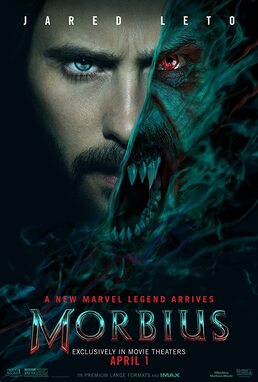
But perhaps we have a better candidate for our purpose in Morbius, the new entry into the Marvel Cinematic Universe. A character with an origin story that resembles the Man-bat origins so closely that one wonders how comic book writers get away with copyright law-suits. In any event, there is one key difference between the two. Morbius is not an altogether hideous and brutish creature like Man-bat. He succeeds in keeping his human wits and charms intact – at least, on most days. There is an important lesson to be learnt about Hindu-Muslim dialogue in such characters. For our purposes, let us step away from both our characters of blockbuster fame, and meet someone else who inhabits a similar plane of reality.
Meet Charles. Like any bat-obsessed vigilante, Charles is naturally based out of a secret lair bedecked with bats. Charles has also been performing unapproved genetic experiments with bat-DNA. One fateful night, as it so happens, he strikes a breakthrough. He decides on administering a first micro-dose of the serum to himself. Imperceptible cellular and molecular changes begin as the fluid flows across his bloodstream. The changes are too miniscule for him to perceive any effect. He retires disappointed to his bed.
Early next morning, as Charles climbs down the spiral stairway into his lair, with an espresso in one hand and a fresh copy of The Guardian in the other, he almost spills the contents of the cup stopping suddenly in his tracks. The bats are hanging from the ceiling stalactites as usual, but today the otherwise obstreperous bunch has organized itself in a show of unnatural discipline.
“Salams!”, they greet him in chorus.
He’s taken aback, equally by their legible vocabulary as by their surprising Islamic disposition. He freezes for a few seconds while they eerily contort their lips into a smile. With a groggy head, Charles hastily gulps the steamy espresso, burns his tongue, and attempts to regain composure.
“Walekum Salam” he remembers to return the greeting, half out of fear that they might treat his fumbling as a sign of hostility.
“And may the mercy and blessings of God be upon you”, they quip in unison.
A seemingly senile bat then swings and perches right in front of him. Charles can somewhat recognize having previously noticed this one lurking in the distance. He is now suddenly struck with the awareness that the face of this creature is that of a person. It is not a beast, but an aged and ostensibly wise companion that is now meeting him.
“Don’t be startled, Charles” the elder bat breaks the silence. “We have been keeping an eye on you. It is written for everything on the earth that it will be witnessed.”
“Wh-what?.. h-how a-are you speaking?”
“You ask the wrong question, dear. It is you who have stumbled across the bridge of ignorance and are somehow able to hack into our language. But it is not the how that you should be concerned about, Charles. It is the why. The why is always so much more significant than any mere how. Or have you forgotten that quote from Nietzsche that you had so fondly emblazoned on a sticky note atop your college desk at Cambridge.”
“Wait… how could you know that?… ” Charles struggles to find the words or even the voice.
“Not how, but why.”
The bat is clearly not forthcoming with any direct answers at this point.
“Did you seriously think us soulless creatures as you blithely dissected our brethren for your scientific fancies.” The elder says staring with bloodshot eyes at Charles who is tensing with dread.
“But alas, we must not forget that you are our brother too. Which naturally complicates our feelings towards you, to say the least”, the elder resumes a stoic poise and closes his eyes saying this.
“Believe me… er… sir?… I am terribly sorry… In my defence, how was I to know that non-human animals also possess higher intelligence? In any case, believe you me, I would never pointlessly harm any creature were it not for some significant scientific purpose.”
“Ah! the alter at which modern man justifies everything!”
“No, no. As I said, I never took you to be such highly sentient creatures. Otherwise, I would never had done all that I did.” Charles vainly tries to save face.
“Don’t worry, dear. We accept your terrible attempt at an apology. And we mean no hostility either. We and you, and all carbon-based lifeforms are after all temples of the Spirit. But do not expect us to extend the same courtesy to your ghostly machines, those ‘artificial intelligence’ units behind whose backsides we have preferred to deposit our daily excreta, as you will soon discover.”
“Excuse me… what?” Charles doesn’t even want to go there. He gulps down the choking feeling building in his throat and ventures, “forgive me, but I don’t see any reason why AI should be excluded from the ambit of consciousness. Granted, it’s consciousness may be rudimentary at the present compared to the complexity of human minds. But there is no reason to assume that such technology will not outstrip human ingenuity in the future.”
“I wouldn’t get my hopes up, if I were you. At least not with the Turing machines that your species is currently working with. A Turing-based system – which includes practically all your modern computers and smartphones – can never become conscious, or to put it more precisely, these machines cannot become the subjects of phenomenal experience.”
“What makes you guys so sure?”, Charles asks trying to conceal his building irritation even as the furrows on his brow betray him.
“Really?”, the elder looks into the vigilante’s eyes with what seems to Charles the confidence and imperturbability of a seasoned philosopher. “Have you never heard of Searle’s Chinese Room argument? Like a Turing machine, the Chinese room can imitate a task perfectly well, without having to understand it. To imitate the structure of a language is not the same as to understand it. In the Chinese Room, understanding or ‘intelligence’, if you like, is supplied externally to the system by the interpretive (human) agent.”
Charles almost staggers in his place. He hastens to change the topic, suddenly realizing how embarrassingly he would fare in a debate on the philosophy of mind, particularly with a talking bat. He finally expresses his other initial surprise “I never would have taken you to be Muslims, or even assumed you had religion in your colonies too.”
“Strange that you should say that. We have always remained in submission to the laws of our natural calling. That is our islam.”
Neither of them speaks for a few minutes, and the pregnant pause is becoming too much for Charles. Seeing his pale expression, the elder speaks reassuringly “If it makes you feel any better, we also accept other manifestations of God apart from Muhammad.”
“But surely, Muhammad wasn’t God!”
“Oh dear! Whatever gave you the absurd idea that the manifestation is the same as the manifest-God? Or that the manifest-God is the same as the unmanifest-God? You speak like a true ignoramus, Charles. Your predecessors a few hundred years ago understood these points of logic much better. Modernity’s material progress has come at a great intellectual and cultural cost, we’re afraid. No self-respecting thinking person can afford to ignore Ramanuja or Ghazali or Aquinas – not a few hundred years ago, and not today. You will find that philosophers age like fine wine. Plato’s legacy grows greater with the passing of the ages. All latter-day wannabes can only aspire to be footnotes to the greats.”
Charles is astounded but attempts to defend himself. “You seem to be using eclectic philosophical sources. Didn’t you say you were Muslims to begin with?”
“No one can be so bold as to make that claim for oneself. One only strives to be muslim, to remain in submission to the Spirit. Islam is not a noun but a verb. Remember, it is not who we are underneath, but what we do that defines us.”
“Waaaiit a minute…”
The elder pays no regard: “Recall Ramanuja’s teaching. The One Brahman is manifest as Para, Vyuha, Avatara, Antaryamin, and of course, the form least understood among your tribe, the Arcavatara – what you condescendingly term the ‘idol’…”
“Whoa… heavy stuff”, Charles says reeling.
“But sure, we can call Muhammad a messenger of God, if that is your preferred theology.”
“It’s not! I’m just correcting a factual error.”
“Ah, you humans get hung up on those, don’t you? And often for things that do not concern you at all. We never fully understood why God chose you for the gift of higher consciousness.”
“Facts are important!… I mean.. aren’t they?” Charles peevishly protests, struggling hard not to sound desperate. He sees that the bats aren’t ones to insist on theological pedantry. They prefer to entertain the happy beliefs of their interlocutor, rather than argue. He finally confesses: “I’m an atheist though, as you probably know.”
“Yes, we’re aware. And we don’t mind your theological ignorance in the least bit. As far as we’re concerned, your nocturnal actions are those of a virtuous man… barring your pathetic Don Juanism.”
“Wait, are you referring to that night when…”
“Time for Surya Namaskar!” one of the bats announces. The others respond in chorus: “Prayer is better than sleep“, and the congregation quickly retires in an orderly manner.
“What?! How will you manage the asanas?”
They leave before he can get his reply and he stands dumbstruck staring at them as they retreat into a nearby hollow. Struggling to process any of what just transpired, he consoles himself with the thought that he might soon wake up from this unhappy nightmare. He drowns the remaining cold espresso in a single gulp, collapses into the chair, where he sits motionless and aghast, his face in his hands.
After Fajr, Charles finds the group praising the Spirit for restoring vitality after one more cycle of sleeping and waking.
“You may not recognize this, Charles, but the warmth and the light of the sun is a blessing even for us creatures of the night. We appreciate all forms that the Spirit sends forth. The yin and the yang, the jamal and the jalal, are two interdependent poles of one reality. In the alternation of the night and day are signs. We are naturally nocturnal beings, while you are conditionally so. But we both are governed by our own biological rhythms and we must both reverence the laws of our bodies.”
“Hmm… an interesting philosophy” Charles remarks feigning enthusiasm.
“My friend, all theory is gray, and green the golden tree of life!”, the elder announces channeling Mephistopheles.
Charles is growing increasingly uncomfortable with the mystical language and wants to bring the discussion to something less ethically demanding: “Hang on a second… do you even know what color is?”
“We will take your word for it…” the elder says wanting to revert to the more pressing existential discussion.
“Not so fast!”, Charles is suddenly energized. He has finally found an area of knowledge he can confidently best the bats at. In fact, he starts to see himself as carrying the burden of responsibility that might have plagued that single prisoner who escaped Plato’s cave, saw the world outside, and returned to explain its features to his fellow prisoners. Only to find that since the prisoners only ever knew the world through shadows falling on cave walls, they had no sensory experience with which to make sense of their former companion’s apparent ramblings. Charles identifies with the tragic Platonic hero, trying hopelessly to persuade his blind bat friends that there existed such a thing as color and that the world was full of it. Charles simply will not let go.
Being courteous creatures, the bats don’t let on that they see Charles’s protracted insistence as all but nonsense, although his peculiarly human hubris is a habit that has started to get on their nerves. They reassure him again that they will take his word for the existence of these ‘colors’ that he seems so stiff-necked about.
“But that’s not enough for you, is it Charles?”
“Look, for the millionth time, this is not something you should take on belief! This is a matter of the objective empirical reality of the world!”
“Isn’t it always? … Regardless, we believe we have Wittgensteinian license to maintain our silence whereof we cannot speak. We would never haven taken you to be such a logical positivist.”
“Logical what? Anyway, philosophical jargon won’t help you buy your way out of this. Our era of science has long made philosophy redundant.”
“We have read the relevant science, mind you. To be sure, we are genuinely intrigued by wave-particle duality. But be careful now. Quantum physics can be a risky recourse for a committed logical positivist like yourself. We doubt if you are any exception to the run-of-the-mill logical positivist who is as much a “believer” in the fictional mythologic narrative that is sold along with the science. What pass as peppering are actually enframing devices. You see, your celebrity scientists aren’t in the business only for peddling scientific facts and figures. At heart, they are master-storytellers, if not fantasy mongers. And they are successful because these are stories your kind seems to want to believe in.”
“Nonsense. Belief has nothing to do with science. I don’t take anything on belief. I do my own reasoning and research.”
“That’s good to know. So we take it you may have read Aquinas and are familiar with classical Thomism?”
“No. I haven’t.”
“That’s okay. Perhaps you have gone through Avicenna’s ontological argument, or Ibn Arabi’s philosophy of Wujud, or indeed, Shankara and Ramanuja acharyas’ various commentaries on the Gita or the Brahma Sutras?”
“Afraid not.”
“Well, you must have surely scoured the breadth of Anglophone philosophy, being the logical positivist that you are!”
“If you count Russell’s History of Western Philosophy as scouring…”
“Heavens! Have you at least tasted the ‘experiences’ you seem ever so quick to reject?.”
“I was never religious to begin with.”
“Then, dear Charles, you are no atheist.. We regret to inform you, you are simply a bona fide ignoramus.”
“Hey… I have come to my atheism independently. Why! I have read all of Dawkins, Hawking, Dennett, and Pinker.”
“How adorable.”
“Hey!”
“It is genuinely adorable that you read. You seem to have done some independent reasoning which led you to your initial conclusions. But now that you have come to these conclusions and over time grown comfortable in them, you are no longer as mentally agile as you were when you first started out.”
“What else would you have me do?”
“Challenge yourself, Charles. Read beyond your ‘church fathers’. The church of logical positivism has had many great recent revivers that have indeed done good to popularise science. In our estimation, Dawkins and Sagan have written some of the most eloquent and inspiring passages on nature and the cosmos. But the genre, in general, has had the unwitting effect of turning many good-willed non-partisans into positivists. It was sad to see the great Stephen Hawking similarly stepping into a terrain his training in physics had ill-prepared him for, by announcing the “death of philosophy” shortly before his own death. Now, I know what you’re thinking. No. This wasn’t nearly as monumental an event in literature as Neitzsche’s prophetic proclamation of the death of God. It was all but a cheap parody.”
“You guys can be quite preachy, you know that. You have so much to say all of a sudden. You used to be deceptively quiet in the beginning.”
“Well, we didn’t want to scare you. Atheists are easily scared.”
“What do you mean? We are definitely more courageous than most religious believers”
“Sure. Who’s denying that? We’re talking to you now, aren’t we? Whataboutery is never helpful, Charles. Think of yourself, have you had the courage, and indeed patience, to read the other side? I mean truly read them. To read them in their most developed and eloquent of writings. Of course, in order to even begin grasping their advanced ideas, you would need to orient yourself with them first and at least “hang around” in their world for a considerable time as your social anthropologists do. Do yourself a favor, Charles, and read better atheists. You can never go wrong with the classical anti-theists. Begin with Hume, Freud, Camus, Schopenhauer, and most importantly, Nietzsche. We can respect those who maintain the kalima: “There is no God and Nietzsche’s Zarathustra is His prophet.”
“Hehe”, Charles snickers goofily.
“And seeing as you are so caught in your analytic mind,” continues the elder, “make sure to cultivate a taste for literature and poetry.”
“Oh yes. I’ve always wanted to read some of the western classics for a long time. I always appreciate a good book recommendation! But you must admit, it’s not easy for everyone to find the time or the temperament to be so self-critical.”
“It’s not easy for anyone.” says the elder matter-of-factly and continues with concern “… because once it has become easy, it has stopped being an active process.”
“I see your point. I had a Hindu martial arts teacher in Kathmandu who taught this class on the Kena Upanishad that I now recall. I should revisit my notes again. Neti, Neti, all the way, am I right?”
“Precisely. The same teaching has been known by other names in other cultures: negative or apophatic theology in Christian theology, or as tawhid salbi, in Islamic kalaam traditions. The utility of this teaching lies not only in the knowledge of the Divine but in knowing your self, if you recall that passage in the Kena Upanishad. You know, you surprise us sometimes with your familiarity with the Eastern classics. Particularly given your fondness for bandying about your logical positivism.”
“Haha… I suppose I see myself as a child of both the East and West. I believe in taking the best from both worlds.”
“That is indeed a noble ambition. But given your predilections, it may not be as easy as it seems. Sometimes you will need to take a leap of faith in order to understand. What we’re asking is no different than what your literary theorists call suspension of disbelief, which is what we do whenever we approach an art-form, whether in reading a novel or in watching a film. If you’re watching Nolan’s Inception, you don’t ask how dreams can be intercepted or how the technology works. You won’t get more than a few minutes into the movie if you get get hung up on such technicalities. Instead, to grasp the movie, you suspend disbelief, as it were, for the two hours… um, wait… wasn’t Inception’s run-time even longer, Charles?”
“Sorry, haven’t heard of that film. And I’m afraid this Nolan guy isn’t on my radar either.”
“Of course, not. We forget that our universe is a dream being dreamed up as we speak by a somnambulist at the keyboard. This is all an illusion or Maya, afterall. It is a pity the fourth wall doesn’t collapse for you as it does for Deadpool.”
“I assure you, sir, I would know if this was a dream. But what is a deadpool, again?”
“Ryan Reynolds? You don’t know the guy, do you?”
“No”
“Didn’t think so.”
“Anyway, I think I see the merit in your suggestion regarding a suspension of disbelief. But surely you’re not asking me to give up all that I have learned so far in order to learn something new.”
“Of course not. But you can never learn something you think you already know.”
“Surely I can’t abandon empiricism or ‘logical-positivism’ as you apparently call it. It defines the core of my worldview. It is simply who I am.”
“Why do you care so much about who you are or where you stand, Charles? You shouldn’t be so bothered about identity labels if you’re interested in making real progress. Your self-image too is an idol that you need to bring a sledgehammer to. Objectivity, therefore, is a deeply spiritual state of mind.”
“Huh. I never thought of it that way.”
“Isn’t it always so? Isn’t the ego the surest way to muddle your perception of whatever has seized your attention? When it comes to your worldview, you need to make sure you adopt or reject reasons purely for objectivity’s sake. While in itself an incomplete step, it is nonetheless a prerequisite of objectivity that your judgment remains unclouded by personal prejudice. You will most likely not be persuaded by the Quran’s warnings against the dangers of vanity, but perhaps you will be reassured that Ryan Holiday, the Daily Stoic himself, insists on taking the ego as your enemy.”
“Ego is indeed the enemy… Guys, this might sound strange… But I have dreams, which feel like more than dreams, where I am a wealthy New York City investment banker whose life is the epitome of vanity, to the point that it has driven him to become a depraved, debauch, and murderous human being… I know it makes no sense…”
“Interesting. It actually makes perfect sense. The American Psycho and the Batman shared a common soul in an alternate universe.”
“What is it with you and this mumbo-jumbo?!”
“Well, let’s just say you should be thankful it wasn’t your test in this lifetime.”
“Now, what does that mean? What other lifetime is there?”
“Metempsychosis is very much a reality, dear Charles. Just because you don’t remember, doesn’t mean no one does. How else do you think we are having this conversation if the Jivas within both of us weren’t of a kind?”
“But that’s isn’t scientific?!” asks Charles almost having a panic attack.
“Our debate has never been about the science, has it, Charles? Or are you as convinced of your scientism as you will ever be? Try this. Take a hard look at Schrodinger’s equation and honestly tell us you don’t feel your head spinning from its sight. Do you honestly not feel challenged in your positivist convictions by studying such a thing as the Observer-Effect? If nothing assails your unshakeable fortress of mind, you should consider whether you have anything worth preserving within the boundary of those mental ramparts you have erected for yourself.”
Charles bows his head staring into the ground with a hollow expression. Then raises his right index finger and recites. “I bear witness that there is no god but God and that Muhammad is His Messenger”
“O… kay… Totally necessary.”, the elder exchanges embarrassed looks with his fellow bats.
“Got you!, Hahahaha!” guffaws an insufferable Charles.
“Child, you’ve got nothing… ”, the elder sighs, slightly irritated but mostly relieved. He speaks somberly now. “Pulling that stunt you should know that accepting God as ‘one’ does not mean that there is only one path or prophet or Avatar. The Islamic Kalima is no different than Advaita Vedanta in this sense. Both speak of Absolute One-ness in different ways. Both are therefore amenable to short-sighted readings that preclude diversity. In fact, to even call such reading shortsighted is unfair. It is only a reading that is blind to the meaning of the scripture that can so distort it. And… nevermind.”
“What were you going to say?”
“… just that even when reading scripture, it helps not to be a logical positivist”, the elder can’t restrain his smirk.
“There you go with it again! I don’t like this name-calling. It’s infuriating!” protests Charles.
“Firstly, there’s no need to take every statement as a personal accusation. Secondly, shut up! You didn’t even know what the term meant a few seconds ago.”
“Right, sorry.”
“We forgive you. Now pay attention. Absolute Reality is one. There are multiple view points or Darshanas of knowing It/Him/Her. ‘Ekam Sat, Vipra bahuda vadanti. “Truth is one. The wise call it by many names”, to cite the Rig Veda. Mind you, this is not an invitation to philosophical relativism. Notice, it is the wise that know Truth through multiple names. Not every name of Truth is equal. “How can those who know be equal to those who do not know?”, to quote the scripture you were just mocking.”
“Hey, I wasn’t mocking Islam. I care deeply about my Muslim fan base.”
“Exactly. What greater mockery than not giving it the courtesy of being treated as a valid philosophical option. It is a misguided liberal assumption to believe that your indifference to others’ beliefs amounts to your respect for their beliefs. Remember Charles, public indifference to truth is no less harmful to a civilization than fanatical insistence on truth.”
“You guys are impossible!”
“So we are. Speaking of impossibilities, this ‘miraculous’ conversation that we are having is soon coming to an end. The God given gift is returning back to its source.”
“Again with God?! Why don’t you see that the success with the bat serum was my own doing entirely? God had nothing to do with it.”
“Whoever said it wasn’t your own doing? That is of course your phenomenological experience. However, ontologically speaking, God is still the cause of every accident that transpires.”
“How can I take such a tall claim on mere faith?”
“You don’t have to. You merely have to read some Hume and Ghazali to deconstruct your everyday confidence in causality. And, if you are up to the task, the Hand of God can be seen firsthand. It is everywhere, and nowhere. Hidden, yet everywhere apparent. It is indeed possible to see the world ‘under the aspect of eternity’, as Spinoza terms it, sub specie aeternitatis – which is also what the Stoics encouraged. However, the Buddha can help you here more than Marcus Aurelius. Though, you would be surprised, to what extent Aurelius can take you if you follow him too.”
“Still… I can’t bring myself to believe in all this, you know.” says a resigned Charles, weary by this point.
“Your belief or disbelief makes no difference to the Universe. God does not need you. You, however, might need Him/Her/It every now and then. But if you are closed to that which is Beyond, we can do little to open that dimension for you. We can ask you to keep an open mind, of course, as we have been insisting. But in our experience, mere ‘open-mindedness’ is seldom enough for this kind of self-growth. Sometimes, the self has to be broken open. The wound is where the light will enter you.”
“Rumi!”, Charles interjects, thrilled at having caught the reference.
“Yes. The memes weren’t entirely useless apparently” the elder replies bemusedly. “Now, is there anything else you would like to know we bid farewell?”
“Yes, there’s something I’ve been dying to know since 1974…”
“Yes?” the elder pouts quizzically.
“What is it like to be a bat? Hahaha!”
“Don’t be silly. Of course, you know the answer to that. It is impossible for a human to know what it is like to be a bat.”
“Really? I thought now that we were able to speak to each other we would no longer face that barrier.”
“It’s not quite so simple. Of course, that 1974 paper by Thomas Nagel marked a milestone in consciousness studies. In fact, credit where it is due, it was a bat cousin of ours who inspired him when they used to frequent his home at the time.”
“Whoa! Really?”
“Yes, but lets credit Nagel with some originality too, of course.”
“Of course”, mutters Charles half-heartedly.
“Well, Nagel chose our species for his thought experiment because of our unique sensory apparatus of echolocation. We can perceive things in a manner that you will never know what it is like to perceive. Echolocation isn’t just another modification of visual or auditory perception. It is something else entirely. To perceive something through echolocation isn’t to see it with eyes closed and as X-Ray outlines, as Marvel’s Daredevil leads you to believe. It isn’t even to hear more acutely and catch the decibels that miss most human ears. No. It is rather like hearing color or like seeing sound. If it makes no sense in the vocabulary that you are equipped with, it is because your vocabulary is constrained by your limited experience. Thus, if we had to describe it, we would not be able to describe it to you. If you were to describe the ‘umami’ taste merely descriptively, you could never do so. Sure, you can describe it as the flavor of monosodium glutamate. But notice, it captures nothing of what it is like to taste umami. This, dear Charles, is the notorious hard problem of consciousness.”
“Wow.”, Charles doesn’t conceal his amazement. “Wait… so this is probably why I failed so terribly to communicate the sense of color to you?”
“It is precisely why. Well done, Charles.” the elder says proudly. “So you see, this is why no amount of verbose description or scientific evidence would furnish the knowledge in this situation that a single gaze by the human eye would provide. When it comes to knowing color, all the science, however persuasive, is no substitute for a single ocular vision of the rainbow.”
“Fascinating”, Charles is excited, half out of the praise he received a moment ago.
“And this metaphor has long been used by yogis and sufis of old. Spiritual truths are not the kind that can be brought down to the democratic lowest common denominator of language. Only those who know will understand. Only those who have had the experience, in some measure at least, will have some sense of the spiritual dimension. It is indeed, preeminently, a matter of tasting, or dhawq as the Sufis call it.”
“This is Brilliant!” Charles utters excitedly, then follows it hesitatingly “… but I will of course have my reservations you know…”
“Of course. And we invite you to have reservations. Do not simply take our word for it. Seek the experience, Charles. A moment’s tasting will tell you what it is like more than any number of scientific or philosophical books can.”
“And this experience is accessible only to a religious believer?”
“Yes and no. It is accessible in a way to anyone who has a mind. In principle, you need nothing more than yourself to grasp the deepest spiritual mysteries. But in practice, we often need a system, as in all things, to make steady and sustainable progress.”
“And so you would want me to accept religion?”
“I want you to accept nothing. I want you only to keep an open mind. Be open to everything. Do not dismiss something now just because you had dismissed it in the past. Let each embrace/dismissal be as fresh as the brand new moment you always encounter. And you should know that most religious traditions have stood the test of time for thousands of years primarily for their experiential dimension. The true test of religion then, is less as doctrine and more as a spiritual tool – what the Buddhists call an upaya, and what Foucault terms ‘technologies of the self’. We encourage you, Charles, to use religious rituals and practices as psychological tools for self-knowledge: either through the practice of honest and introspective self-talk, or in moments of silence, quiet contemplation, and reverie, or through the therapeutic experience of standing naked before God/the Universe – baring all out, pouring your heart out. Just like the gopis at the bank of the river Yamuna lost their clothes before Sri Krishna. Their nakedness being symbolic of how we too must present ourselves before the knowing and loving gaze of the Universe.”
“Illuminating. I must admit, this is a very practical and utilitarian way of looking at religion. As a means to an end.”
“Right. And, isn’t that how it should always be, Charles? Religion was always meant to be a means to the realization of God/Self. The problem arises when believers stop worshipping God and start worshipping religion. In this way, it is believers who can often most insulting of God and defile His name in their misguided defence of Him.”
“I agree. Which is why religious people are most off-putting in my experience.”
“Indeed, Charles. It is humanity’s most beautiful ideas that have the most potential to turn the ugliest. Only organic matter can really decompose. Plastic doesn’t rot.”
“This is all good, but were we getting at something with this?”
“Yes… perhaps this will be our final lesson for now… Returning to the hard problem of consciousness, remember, language is always reductive compared to experience. Right?”
“I guess so.”
“This is always true, but it seldom poses a problem, because the two parties in communication each know what emotion or experience a certain word functions as a stand-in for. But it becomes particularly difficult when the two parties do not share the same experience. It is practically impossible, as we saw with the umami taste illustration or indeed the case of color and bats.”
“Yes, I’ve understood those points.”
“So, you might also understand why we can say that a person who has no foretaste of spiritual experience is a priori predisposed not to grasp spiritually descriptive language. When Osho or Krishnamurti talk of ‘witnessing the witnesser’, you will never know what they are getting at unless you know it. There is no other way to express this fact. Of course, language can and indeed does serve as a temporary conduit in getting you from here to there – if that weren’t true, there would be no spiritual journeys or paths or books or gurus. Each human would be hopelessly caught in an eternal Cartesian self-reflexive navel-gazing.”
“Haha. Way to throw shade on Descartes for no reason.” Charles says snickering.
The elder smiles unapologetically and continues, “So, you see Charles, this is the insight we were sent to teach you about Hindu-Muslim dialogue.”
“Wait, you were sent here? by whom?”
“Who do you think?… Anyway, you must understand now that at the heart of religion is practice, and at the heart of practice is experience, and experiences are fundamentally qualia, to borrow a term from philosophy of mind. Which is to say, no one else who has not had the experience can really know what it is like. Thus while Hindus and Muslims will attempt to read about each other and talk to each other, with howsoever much amount of sympathy they bring, their ambition of ‘understanding’ is fundamentally doomed. They will never fully understand. Since to understand is to experience. As outsiders, they will never penetrate the inscrutable and irreplaceable heart of the Other’s tradition. And, of course, one cannot truly dispute or take issue with what one does not fully understand.”
“Hmm… ” Charles is still processing. “Aren’t we getting into the same navel-gazing loop that you just disparaged Descartes for?”
“Not quite. We must certainly assume that a large portion of the spiritual practice of a religion will remain incomprehensible to those who are not its practitioners. In effect, the entire religion remains inscrutable to the outsider who has little sense of the living spirit of the tradition. But notice, what we are saying is that such experiences cannot be communicated to someone who hasn’t in some sense glimpsed something of that category of experience. By extension, in order to understand the spiritual heart of another religion, it helps to first understand the spiritual heart of one’s own religion. Only once depth is attained at one place, can it be recognized at other places too.”
“That’s interesting…”
“But that’s not all,” the elder retorts, “only a person deeply informed by the lived practices and rhythms of a tradition may grasp the tradition and speak about it with any authenticity. Even then, they may not speak for other practitioners of the same tradition. Scripture is not simply read like any other book. It is chanted, recited, lived upon, and forms the foundation for the various rituals and practices that punctuate the multifarious sacred as well as mundane occasions of life.”
“If this is the case, isn’t all interfaith dialogue, indeed, all dialogue itself, doomed?”
“It doesn’t have to simply be a matter of all or nothing, dear Charles. Indeed there may be precious little that an outsider can denounce or disprove or debate about a tradition not their own. Thus, the requirement to always bring intellectual humility to our dialogues. But we are allowed, indeed encouraged, to maintain our positions and even defend them. However, we must never assume that what for our internal reasons seems plausible must also do so to another person who does not share our framework or experience. The moral philosopher Bernard Williams suggests that we only ever have recourse to internal reasons. We can indeed, try to persuade our interlocutor to what seems right from our reasons and by our lights, but we can only successfully do so using reasoning that is internal to them. We will have to offer reasons that they find compelling, from their sources, and in a manner that is respectful of their traditions of interpretation.”
“So, you see Charles,” the elder continues while Charles has fallen silent, “there is indeed scope for dialogue. However, our argument only suggests that we simply bring more humility in our dialogues since we can never truly know the Other as we know ourselves. We must always seek to further our understanding of the Other while bearing in mind that we will never fully do so. Ultimately, of course, interfaith dialogue is a chance for us not so much to speak or teach, but to listen and learn. To know the Other through their own self-description.”
“Brilliant! … Well Doc, This has been lovely. We should do this more often. When do we meet again?”
“Since our purpose here has been served, we are afraid we may not be able to continue our conversations Charles, not in this form at least..”
“Huh?… what does that mean?”
Charles’ peripheral vision has started to blur, it feels like the lights are fading, he cries out exasperatedly “Wait! What’s happening?”
“Neither of us ever really knew that, did we?” the elder replies unfazed by the apparent breaking down of space-time. “Though Doctor Strange has probably mis-spelled a few of his spells again.”
“Doctor who?”
“No, that’s the time traveler.”
“This doesn’t make any sense.”
“Not everything has to.”
“Wait, is this all real? Or is it just happening inside my head?”
“Of course, it’s happening inside your head, Harry. Why should that mean that it’s not real?”
“Harry?! It’s me Charles, guys! What are you saying?”
“There is more to the Heavens and the Earth, Charles.”
“Wait, this I know… Shakespeare!”
“Arguably.”
“Really? Isn’t that Hamlet? So who else says that?”
“The Quran.”
“Wow.”
“And literally every other scripture, of course.”
“Oh.”
The elder snarls with satisfaction.
 Project Noon